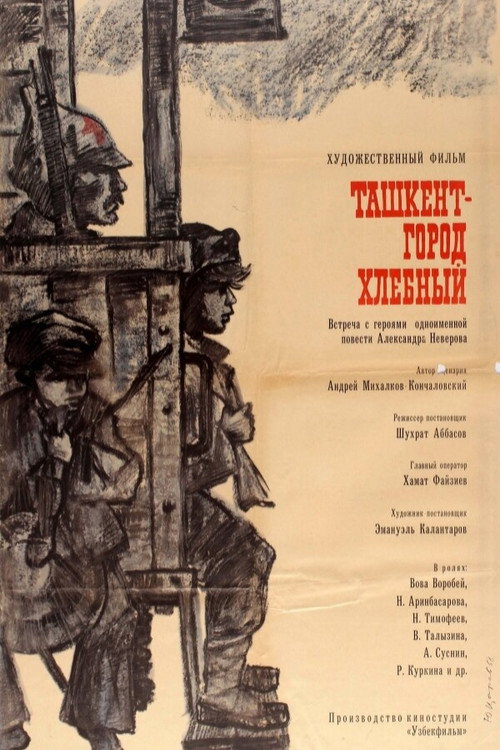
Tashkent, City of Bread 1968
In the stark black-and-white visuals of *Tashkent, City of Bread (1968)*, director Shukhrat Abbasov crafts a poignant melodrama that captures both the harsh realities and quiet resilience of a young boy's journey.
Director: Shukhrat Abbasov
Cast





Frequently Asked Questions
What is Tashkent, City of Bread (1968) about?
*Tashkent, City of Bread* tells the story of a young boy who risks everything by traveling to Tashkent to find work and bring food back to his family. His quest unfolds against the backdrop of economic hardship and post-revolutionary struggles, where every step is both a gamble and an act of courage. The film paints a vivid portrait of resilience in the face of overwhelming odds.
Who directed Tashkent, City of Bread?
Tashkent, City of Bread was directed by Shukhrat Abbasov, a filmmaker who used the screen to explore social issues during a time of relative cultural openness in the Soviet Union.
Who stars in Tashkent, City of Bread?
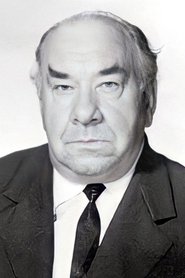
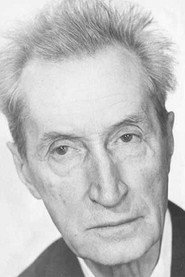
The film features Vladimir Vorobey, Vova Kudenko, Bakhtiyar Nabiyev, Natalya Arinbasarova, and Valentina Talyzina in key roles, each bringing depth to the story's emotional core.
Is Tashkent, City of Bread (1968) worth watching?
While undeniably somber, *Tashkent, City of Bread* offers a compelling blend of historical insight and emotional storytelling. Its stark black-and-white cinematography and unflinching portrayal of struggle make it a compelling watch for fans of drama films that prioritize substance over spectacle. The film's rarity and thematic depth add to its allure.
How long is Tashkent, City of Bread?
Tashkent, City of Bread has a runtime of 97 minutes.
About Tashkent, City of Bread (1968) — A Melodrama of Survival and Sacrifice
In the stark black-and-white visuals of *Tashkent, City of Bread (1968)*, director Shukhrat Abbasov crafts a poignant melodrama that captures both the harsh realities and quiet resilience of a young boy's journey. Written by Andrei Konchalovsky, who collaborated with Andrei Tarkovsky, the film follows a determined child making a perilous trek to Tashkent to earn money for his starving family in the aftermath of the Bolshevik Revolution. The movie immerses viewers in a world of scarcity and struggle, yet it frames this struggle with moments of humanity and hope. Set against the backdrop of Soviet-era Uzbekistan, the film dares to expose the lingering scars of famine and political upheaval, blending intimate storytelling with striking visuals.
The atmosphere is one of quiet intensity, where every frame feels deliberate and every emotion is raw. Abbasov's direction, paired with Konchalovsky's screenplay, transforms a simple survival tale into a meditation on endurance and sacrifice. The film's historical context adds depth, offering a rare glimpse into life on the fringes of the Soviet Union during a period of cautious political thaw. *Tashkent, City of Bread (1968)* isn't just a historical drama—it's a tribute to the unbreakable spirit of those who endure unimaginable hardship.