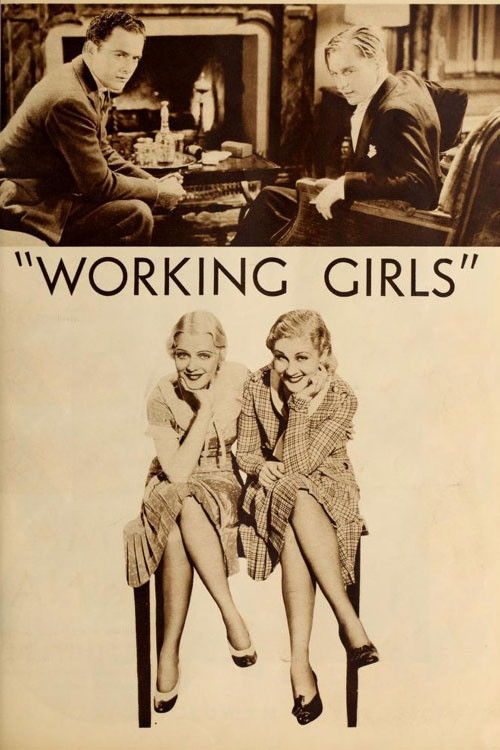
Working Girls 1931
"MEN may do the bossing- but the girls make their own plans for them!"
In the bustling New York of 1931, two sisters from Indiana navigate the complexities of city life in Dorothy Arzner's sharp and witty comedy *Working Girls*.
Director: Dorothy Arzner
Cast







Frequently Asked Questions
What is Working Girls (1931) about?
This 1931 comedy follows two sisters from Indiana who move to New York City, where they carve out their own paths in the workforce. Mae lands a job as a stenographer, while June becomes a telegraph operator, uncovering the challenges and joys of independence in a male-dominated world.
Who directed Working Girls?
Dorothy Arzner, a pioneering female director of early Hollywood, helmed *Working Girls* with a blend of humor and insight.
Who stars in Working Girls?
The film features Judith Wood, Dorothy Hall, Charles 'Buddy' Rogers, Paul Lukas, Stuart Erwin, and Frances Dee in key roles.
Is Working Girls (1931) worth watching?
Though unrated, *Working Girls* is a charming and clever snapshot of early 1930s cinema, with strong performances and Arzner's signature wit. Fans of classic comedies and feminist themes will find much to enjoy in its breezy, understated charm.
How long is Working Girls?
Working Girls runs for 77 minutes, making it a perfect short watch for fans of pre-Code Hollywood.
🎥 Trailer
About Working Girls (1931) — A 1931 comedy about sisterhood and ambition in the big city
In the bustling New York of 1931, two sisters from Indiana navigate the complexities of city life in Dorothy Arzner's sharp and witty comedy *Working Girls*. The dreamy and sheltered Mae Thorpe, fresh off the train from the Midwest, gets a job as a stenographer for the brilliant but eccentric scientist Joseph von Schraeder, while her street-smart sister June lands a position at Western Union. Together, they discover that ambition and independence are just as powerful as old-fashioned grit in a world where men still hold the reins.
With Arzner's deft touch at the helm, *Working Girls* balances humor with a subtle undercurrent of social commentary, exploring themes of sisterhood, self-reliance, and the quiet revolutions brewing in the lives of young women. The film's lively atmosphere and clever dialogue make it a standout in early talkies, offering a snapshot of an era when women were beginning to reshape their futures—one stubborn step at a time.