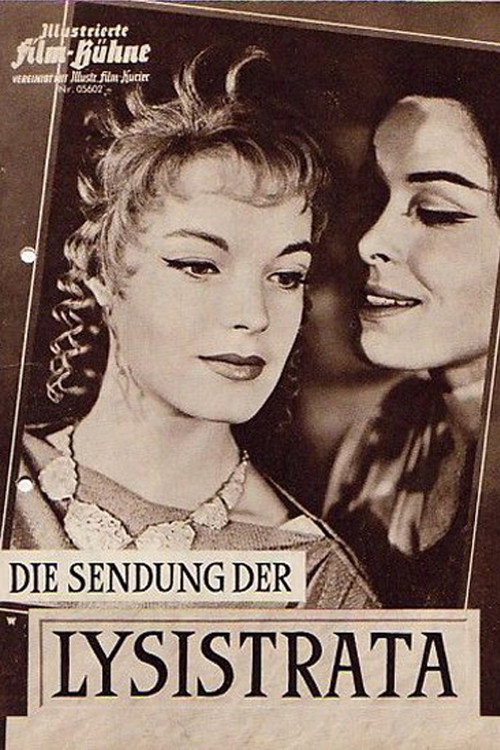
Die Sendung der Lysistrata 1961
In Fritz Kortner's playful 1961 TV comedy *Die Sendung der Lysistrata*, the women of ancient Athens embark on a bold mission to end the brutal Peloponnesian War—not with swords or speeches, but with strategic withdrawal.
Director: Fritz Kortner
Cast








Frequently Asked Questions
What is Die Sendung der Lysistrata (1961) about?
The film follows Lysistrata, a clever Athenian woman who rallies her peers to withhold intimacy from their husbands and lovers until the city's men agree to end the war with Sparta. It's a sharp, comedic take on ancient political strategy turned personal.
Who directed Die Sendung der Lysistrata?
Fritz Kortner, a renowned German director known for his expressive filmmaking and stage work, helmed *Die Sendung der Lysistrata*.
Who stars in Die Sendung der Lysistrata?
The film features a standout cast including Romy Schneider, Barbara Rütting, Karin Kernke, Ruth-Maria Kubitschek, and Herta Worell.
Is Die Sendung der Lysistrata (1961) worth watching?
As a classic German TV comedy, it offers more than just laughs—it's a clever, thematically rich take on female agency and pacifism. While not a blockbuster, its historical charm and strong performances make it a memorable watch for fans of period pieces and social satire.
How long is Die Sendung der Lysistrata?
The runtime of *Die Sendung der Lysistrata* is 97 minutes.
About Die Sendung der Lysistrata (1961) — A Classic Comedy of Love, War, and Female Empowerment
In Fritz Kortner's playful 1961 TV comedy *Die Sendung der Lysistrata*, the women of ancient Athens embark on a bold mission to end the brutal Peloponnesian War—not with swords or speeches, but with strategic withdrawal. Inspired by the legendary Lysistrata, they unite to withhold all affection until the war's men finally lay down their arms. The film blends sharp wit with timeless themes of resistance and solidarity, capturing the spirited energy of a city on the brink of change.
Starring Romy Schneider as the determined Lysistrata, alongside Barbara Rütting and Ruth-Maria Kubitschek in standout roles, the movie balances satirical humor with moments of poignant reflection. Set against a backdrop of ancient grandeur yet grounded in a contemporary spirit, *Die Sendung der Lysistrata (1961)* is a daring exploration of how society can be reshaped—not by force, but by the power of collective action.