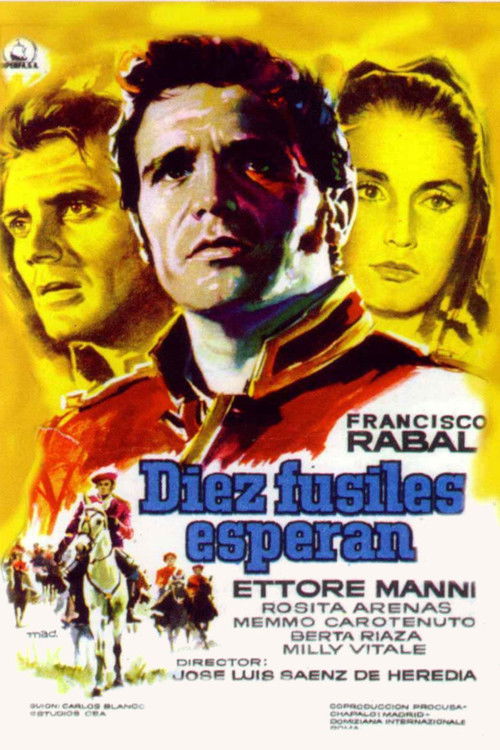
Diez fusiles esperan 1959
Set against Spain's rugged 1830s landscape during the First Carlist War, José Luis Sáenz de Heredia's *Diez fusiles esperan* (1959) weaves a tense and deeply human drama of war, destiny, and sacrifice.
Director: José Luis Sáenz de Heredia
Cast






Frequently Asked Questions
What is Diez fusiles esperan (1959) about?
This 1959 Spanish war drama follows a lieutenant captured during the First Carlist War in the 1830s. Condemned to execution, he begs for mercy—not for military glory, but to see his newborn baby one final time. The film explores themes of duty, sacrifice, and the human cost of conflict.
Who directed Diez fusiles esperan?
José Luis Sáenz de Heredia directed *Diez fusiles esperan*, a filmmaker known for blending historical drama with emotional depth during Spain's mid-century cinema.
Who stars in Diez fusiles esperan?
The film features Francisco Rabal in the lead role, supported by Rosita Arenas, Ettore Manni, Milly Vitale, and Berta Riaza.
Is Diez fusiles esperan (1959) worth watching?
Though unrated on IMDb, *Diez fusiles esperan* stands out as a quietly powerful war drama with strong performances and evocative storytelling. Fans of historical conflict films with emotional weight will appreciate its restrained intensity and poignant narrative.
How long is Diez fusiles esperan?
The film runs for 89 minutes.
About Diez fusiles esperan (1959) — Spanish Civil War drama about love, loyalty, and survival
Set against Spain's rugged 1830s landscape during the First Carlist War, José Luis Sáenz de Heredia's *Diez fusiles esperan* (1959) weaves a tense and deeply human drama of war, destiny, and sacrifice. Francisco Rabal stars as a loyal lieutenant whose fate hangs in the balance after he's captured by enemy forces. Condemned to die, he pleads for his life—not for glory, not for honor—but simply to hold his newborn child one last time. The film's emotional core blends harrowing battlefield tension with intimate familial longing, capturing the absurd cruelty of war and the unshakable bonds that persist even in its shadow. With rich period detail and a somber, reflective tone, this Spanish classic examines the fragility of human connection amid the chaos of conflict, leaving audiences to question where loyalty ends and survival begins.
Crafted in the golden era of Spanish cinema, the film balances grim realism with moments of quiet tenderness, anchored by Rabal's magnetic performance. The narrative unfolds with the steady weight of a historical reckoning, where personal sacrifice and political strife collide in a single, poignant revelation. Audiences drawn to films like *The Bridge on the River Kwai* or *Paths of Glory*—but with a uniquely Spanish perspective—will find *Diez fusiles esperan* a compelling, understated masterpiece that lingers long after the credits roll.