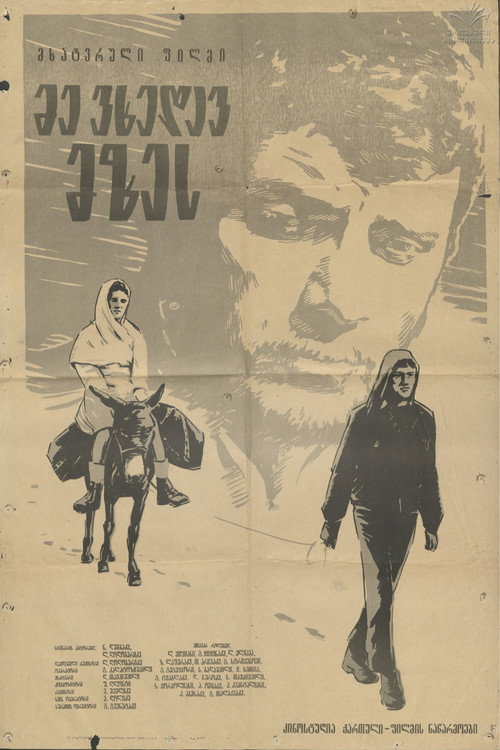
I See the Sun 1965
Set against the backdrop of World War II in Georgia, *I See the Sun (1965)* directed by Lana Goghoberidze weaves a touching tale of resilience and hope.
Director: Lana Goghoberidze
Cast










Frequently Asked Questions
What is *I See the Sun* (1965) about?
The film follows an orphan boy named Zurikela who meets Khatia, a blind girl, during WWII in Georgia. Determined to help her regain her sight, he faces challenges that test their bond and the limits of human kindness.
Who directed *I See the Sun*?
Lana Goghoberidze directed this Georgian drama, bringing a sensitive touch to the wartime romance.
Who stars in *I See the Sun*?
The film features Gela Chichinadze as Zurikela, Leila Kipiani as Khatia, and supporting roles by Lia Eliava, Zurab Laperadze, and Tengiz Archvadze.
Is *I See the Sun* (1965) worth watching?
Despite its unrated IMDb status, this Georgian war-era drama offers a unique blend of romance and resilience. Its emotional depth and historical setting make it a compelling watch for fans of period films and heartfelt storytelling.
How long is *I See the Sun*?
The runtime of *I See the Sun* is 82 minutes.
About *I See the Sun* (1965) — A Georgian WWII Drama of Love and Resilience
Set against the backdrop of World War II in Georgia, *I See the Sun (1965)* directed by Lana Goghoberidze weaves a touching tale of resilience and hope. The story follows Zurikela, a young orphan boy, who crosses paths with Khatia, a blind girl whose spirit shines brighter than her limitations. Inspired by her quiet strength, Zurikela embarks on a heartfelt journey to restore her sight, blending romance and drama against the harsh realities of war. The film captures the essence of human connection in times of darkness, where kindness and determination become acts of rebellion against despair.
Goghoberidze's delicate direction infuses the narrative with warmth and melancholy, while the performances of Gela Chichinadze and Leila Kipiani breathe life into the emotional core of the story. With its blend of war-era tension and tender storytelling, *I See the Sun (1965)* stands as a poignant reminder of how love and courage can illuminate even the bleakest of times.