Erotique 1961
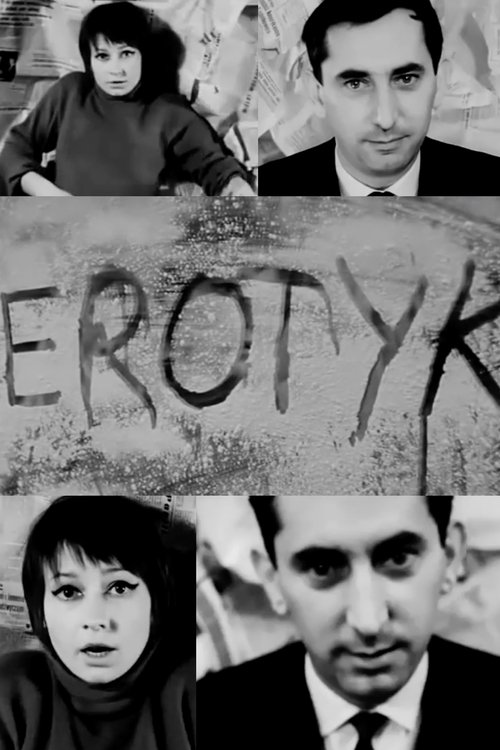
Polish maestro Jerzy Skolimowski delivers a mesmerizing micro-thriller in *Erotique* (1961), a surreal three-minute exercise in suspense and the uncanny.
Director: Jerzy Skolimowski
Cast

Frequently Asked Questions
What is Erotique (1961) about?
A young woman stares into a mirror when she's startled by the reflection of a man who speaks directly to her. Startled by the intrusion, she recoils, turning a private act into a tense, unsettling encounter. The film's brevity amplifies its psychological impact.
Who directed Erotique?
Jerzy Skolimowski, the visionary Polish director known for his bold visual style and exploration of human psychology, directed *Erotique*.
Who stars in Erotique?
The film stars Elżbieta Czyżewska as the woman and Gustaw Holoubek as the man whose reflection intrudes on her solitude.
Is Erotique (1961) worth watching?
As a 1961 Polish thriller with a runtime of just three minutes, *Erotique* serves as a fascinating glimpse into early Skolimowski's craft. While not a mainstream pick, its atmospheric tension and thematic depth make it a compelling watch for fans of experimental or short-form cinema.
How long is Erotique?
The film runs for 3 minutes.
About Erotique (1961) — A Three-Minute Polish Thriller That Sticks With You
Polish maestro Jerzy Skolimowski delivers a mesmerizing micro-thriller in *Erotique* (1961), a surreal three-minute exercise in suspense and the uncanny. The story unfolds through a single, chilling encounter: a young woman, lost in her own world, wipes a mirror only to be startled by the sudden reflection of a mysterious man who breaks the fourth wall with a teasing voice. As she retreats in alarm, the brief scene spirals into an atmospheric meditation on perception, intrusion, and the fragile boundary between reality and illusion. Shot with an eerie stillness, the film drips with tension, its stark visuals and minimal dialogue amplifying every glance and gesture.
Blending psychological intensity with a dash of noir-inspired mystery, *Erotique* showcases Skolimowski's knack for economy and mood, even in his early work. The director crafts a haunting portrait of vulnerability, where a private moment becomes a stage for something far more unsettling. Though brief, the film lingers in the mind, leaving viewers to question what was seen—and what might have been imagined.