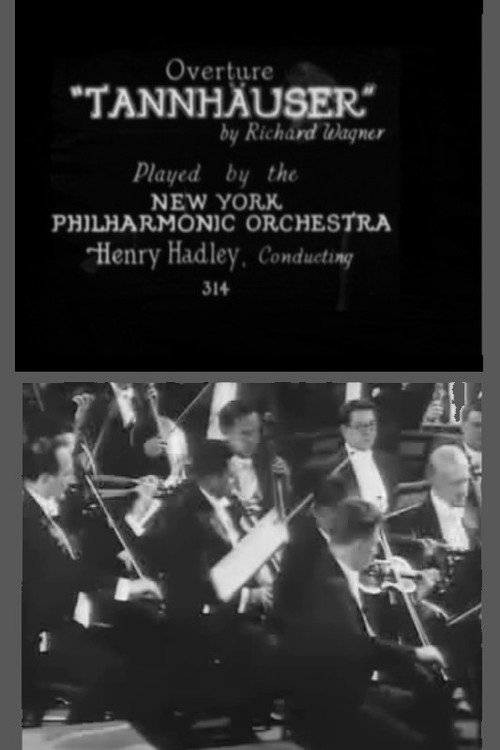
Overture: Tannhäuser 1926
Step into the golden age of cinema with *Overture: Tannhäuser (1926)*, a rare early talkie that captures conductor Henry Hadley leading the New York Philharmonic in Wagner's dramatic overture. Directed by Edwin B.
Director: Edwin B. DuPar
Cast
Frequently Asked Questions
What is Overture: Tannhäuser (1926) about?
This short film showcases conductor Henry Hadley directing the New York Philharmonic in Wagner's *Tannhäuser* overture. Shot in two distinct perspectives, it highlights both the conductor's artistry and the orchestra's harmonious performance, all without a single word spoken.
Who directed Overture: Tannhäuser?
Edwin B. DuPar directed this early talkie, capturing a pivotal moment in classical music history on film.
Who stars in Overture: Tannhäuser?
The film stars Henry Hadley, the renowned conductor leading the New York Philharmonic Orchestra in this historic performance.
Is Overture: Tannhäuser (1926) worth watching?
While short in length, its historical significance and the sheer beauty of Wagner's music make it a compelling watch for classical music fans. It's a unique artifact from the transitional era of silent films to talkies, offering a glimpse into early cinema's experimentation with sound.
How long is Overture: Tannhäuser?
The runtime is 10 minutes.
About Overture: Tannhäuser (1926) — Early Talkie Captures Wagner's Grand Overture in Stunning Detail
Step into the golden age of cinema with *Overture: Tannhäuser (1926)*, a rare early talkie that captures conductor Henry Hadley leading the New York Philharmonic in Wagner's dramatic overture. Directed by Edwin B. DuPar, this ten-minute short film blends classical music with visual elegance, featuring over 80 tuxedoed musicians in a rich, cinematic experience. Shot from two perspectives—one showcasing Hadley's commanding presence and another offering an intimate close-up of the orchestra—it immerses viewers in the grandeur of Wagner's masterpiece. The film's atmosphere is both reverent and cinematic, a snapshot of 1920s artistic brilliance. While devoid of dialogue, its power lies in the marriage of music and image, a testament to the era's innovative spirit.
As a historical artifact, *Overture: Tannhäuser (1926)* stands out for its singular focus on performance art. It offers a glimpse into early sound cinema's experimentation, where sound and vision merged to create a fleeting yet unforgettable experience. Ideal for classical music enthusiasts and silent film aficionados alike, this short film is a bridge between the silent era and the dawn of talkies, preserving a moment of orchestral brilliance for posterity.