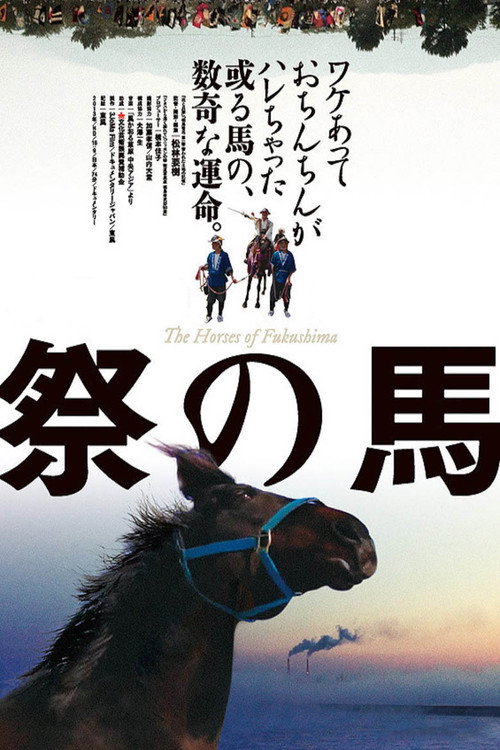
The Horses of Fukushima 2013
Directed by Yoju Matsubayashi, *The Horses of Fukushima* (2013) offers a poignant look at resilience amid devastation.
Director: Yoju Matsubayashi
Frequently Asked Questions
What is The Horses of Fukushima (2013) about?
This documentary explores Minami-soma's Soma Nomaoi festival, a 1,000-year-old celebration of wild horses, set against the backdrop of the 2011 Fukushima nuclear disaster. As residents fled, rancher Shinichiro Tanaka returned to save his horses, defying orders to euthanize them. The film captures the clash between tradition and survival in a region scarred by tragedy.
Who directed The Horses of Fukushima?
Yoju Matsubayashi directed *The Horses of Fukushima*. Known for his evocative documentary work, Matsubayashi brings a sensitive lens to stories of human endurance and cultural heritage.
Who stars in The Horses of Fukushima?
The film centers on rancher Shinichiro Tanaka, a figure whose personal struggle drives the narrative forward. While broader cast details aren't specified, Tanaka's resilience anchors the documentary.
Is The Horses of Fukushima (2013) worth watching?
As a 74-minute documentary exploring resilience and cultural heritage, *The Horses of Fukushima* offers a moving perspective on survival. Its themes of defiance and tradition resonate strongly, making it compelling for fans of thoughtful, real-life stories. While unrated, its emotional depth speaks volumes.
How long is The Horses of Fukushima?
*The Horses of Fukushima* runs for 74 minutes.
🎥 Trailer
About The Horses of Fukushima (2013) — A documentary of resilience after Japan's nuclear disaster
Directed by Yoju Matsubayashi, *The Horses of Fukushima* (2013) offers a poignant look at resilience amid devastation. This documentary follows the aftermath of the 2011 earthquake, tsunami, and nuclear disaster in Minami-soma, Japan, where centuries-old traditions collided with catastrophe. At its heart is rancher Shinichiro Tanaka, who defied government orders to cull starving horses left behind in the evacuation zone. The film contrasts the community's deep cultural ties to their equine heritage with the harsh realities of survival in a land poisoned by radiation.
Against the backdrop of abandoned streets and silent fields, Matsubayashi crafts an intimate portrait of courage and defiance. The documentary captures the stark beauty of Fukushima's countryside as it breathes new life into a fading ritual, where humans and horses once moved in harmony. It's a story of loss, but also of stubborn hope—a testament to the unbreakable bond between people and the animals they cherish.