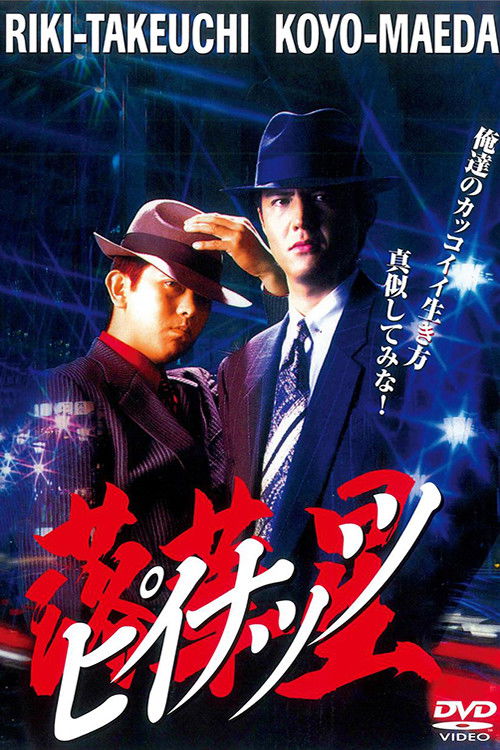
Peanuts 1996
Peanuts (1996), helmed by the provocative Japanese filmmaker Takashi Miike, dives into the gritty underworld of Tokyo's neon-lit streets with a tale of loyalty and rebellion.
Director: Takashi Miike
Cast







Frequently Asked Questions
What is Peanuts (1996) about?
Peanuts (1996) follows two enigmatic troublemakers who challenge a powerful yakuza-controlled gambling ring after intervening to save a small grocery store owner from ruin. Their bold move sparks a high-stakes game of cat-and-mouse, blurring the line between heroism and chaos in Tokyo's shadowy districts.
Who directed Peanuts?
Peanuts (1996) was directed by the acclaimed and prolific Japanese filmmaker Takashi Miike, known for blending dark humor with brutal action in his crime thrillers.
Who stars in Peanuts?
The film stars Riki Takeuchi and Koyo Maeda as the mysterious duo, alongside Mai Kitajima, Ryo Yamazaki, and Hitoe Ootake in pivotal supporting roles.
Is Peanuts (1996) worth watching?
Peanuts (1996) is a sharp, compact crime thriller that showcases Miike's knack for high-energy storytelling and moral ambiguity. While it doesn't boast an IMDb rating for reference, its tight runtime and stylish execution make it a compelling watch for fans of Japanese yakuza cinema.
How long is Peanuts?
Peanuts (1996) runs for 87 minutes.
About Peanuts (1996) — Two yakuza-busting tough guys shake up Tokyo's underworld
Peanuts (1996), helmed by the provocative Japanese filmmaker Takashi Miike, dives into the gritty underworld of Tokyo's neon-lit streets with a tale of loyalty and rebellion. When two unnamed tough guys—played by Riki Takeuchi and Koyo Maeda—cross paths with a struggling elderly shop owner drowning in yakuza gambling debts, they see no choice but to strike back at the syndicate's heart. What begins as a simple act of defiance spirals into a tense, stylish showdown, blending black comedy with brutal action. Miike's signature blend of dark humor and raw intensity paints Peanuts (1996) as a cult gem for fans of unconventional crime dramas.
The film thrives on its stark contrasts: the unspoken bond between outcasts versus the cold machinery of organized crime, the fleeting warmth of neighborhood life set against the harsh glow of neon signs. With a runtime tight enough to keep the adrenaline pumping, Peanuts (1996) delivers a punch-packing narrative that lingers long after the credits roll. It's a snapshot of Miike's fearless storytelling, where every frame crackles with tension and every decision feels like a gamble.