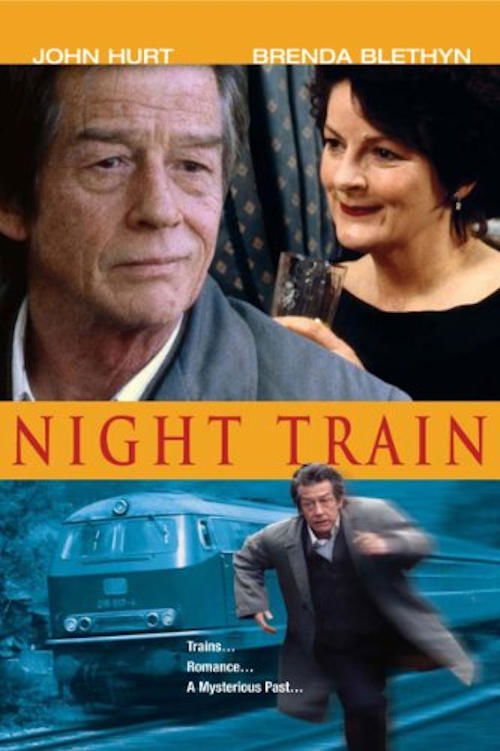
Night Train 1998
"Trains, Romance, A Mysterious Past"
Night Train (1998) is a compelling drama-romance that follows a recently released prisoner who finds himself on the run from dangerous criminals.
Director: John Lynch
Cast





Frequently Asked Questions
What is Night Train (1998) about?
Night Train follows a man released from prison who must hide from gangsters while staying at a Dublin boarding house. There, he forms an unlikely connection with the landlady and her daughter through their shared fascination with his model train collection.
Who directed Night Train?
Night Train was directed by John Lynch, known for his work in Irish and British cinema.
Who stars in Night Train?
The film stars John Hurt, Brenda Blethyn, Pauline Flanagan, and Rynagh O'Grady in key roles.
Is Night Train (1998) worth watching?
With its strong central performances and intimate storytelling, Night Train offers solid drama-romance entertainment for fans of character-driven films. The 80-minute runtime makes it an accessible watch for those interested in thoughtful cinema.
How long is Night Train?
Night Train has a runtime of 80 minutes.
About Night Train (1998) — A Fugitive's Journey Through Love and Redemption
Night Train (1998) is a compelling drama-romance that follows a recently released prisoner who finds himself on the run from dangerous criminals. Seeking refuge in a Dublin boarding house, he encounters an unexpected connection with the proprietor and her shy daughter, both of whom find solace in his elaborate train collection. Director John Lynch crafts an intimate character study exploring themes of redemption, isolation, and the power of human connection. The film features powerful performances from John Hurt and Brenda Blethyn, whose characters form a tender bond amid the backdrop of urban tension and personal demons. At just 80 minutes, this concise yet emotionally resonant story uses the metaphor of trains and model railways as vehicles for escape and hope. The atmospheric Dublin setting enhances the film's contemplative mood, making Night Train (1998) a distinctive entry in British independent cinema.
This low-budget gem showcases how meaningful storytelling can transcend conventional narrative structures. The mysterious past of the protagonist creates ongoing tension while his relationship with the boarding house women provides emotional grounding. Lynch's direction emphasizes character development over action, allowing the audience to invest deeply in these flawed but sympathetic individuals. The train sets become symbolic elements, representing both childhood wonder and the desire to escape life's harsh realities.