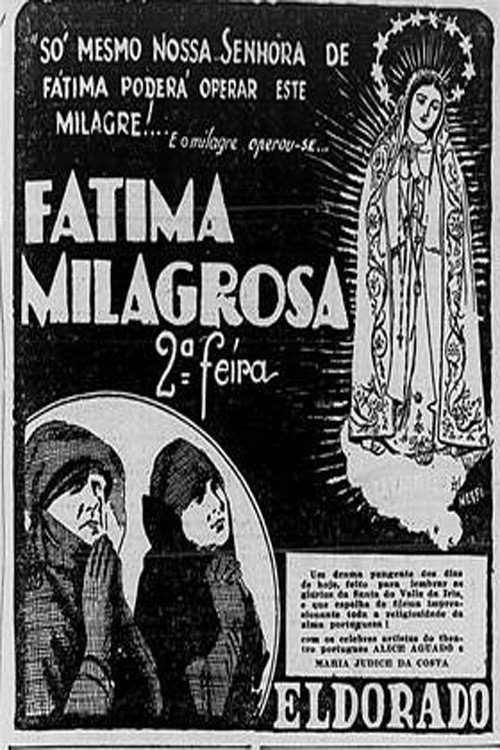
Fátima Milagrosa 1928
Set against the rustic landscapes of early 20th-century Portugal, *Fátima Milagrosa* (1928) follows young Aninhas, a girl bound to her bed by paralysis, as she prays for a divine miracle.
Director: Rino Lupo
Cast


Frequently Asked Questions
What is Fátima Milagrosa (1928) about?
This early Portuguese silent film tells the story of Aninhas, a paralyzed girl who turns to the Virgin Mary after her prayers for a miracle go unanswered. Her journey culminates in a legendary pilgrimage to Fátima, where she seeks divine intervention alongside a devoted crowd.
Who directed Fátima Milagrosa?
The film was directed by Rino Lupo, a pioneering figure in Portuguese cinema known for his atmospheric storytelling and deep engagement with cultural and religious themes.
Who stars in Fátima Milagrosa?
The cast includes Manoel de Oliveira, Rafael Alves, Beatriz Costa, and Pedro Santos, with Aida Lupo portraying the central character, Aninhas.
Is Fátima Milagrosa (1928) worth watching?
Though unrated, this silent-era drama offers a rare glimpse into early Portuguese cinema and the power of faith-driven narratives. Its historical significance and emotional depth make it a compelling watch for fans of classic films and religious stories.
How long is Fátima Milagrosa?
The film runs for 159 minutes, offering an immersive experience into its historical and spiritual themes.
About Fátima Milagrosa (1928) — A Poignant Silent-Era Drama of Faith and Miracles
Set against the rustic landscapes of early 20th-century Portugal, *Fátima Milagrosa* (1928) follows young Aninhas, a girl bound to her bed by paralysis, as she prays for a divine miracle. Directed by the visionary Rino Lupo, this silent-era family drama weaves themes of faith and perseverance into a poignant tale of spiritual seeking. When earthly hopes fade, Aninhas's devotion shifts from a local saint to the Virgin Mary herself, leading her on a transformative pilgrimage to Fátima—a journey mirrored by thousands of believers in search of divine intervention. Lupo's atmospheric storytelling captures the hushed reverence of religious tradition, blending historical reverence with the raw, emotional power of personal faith.
The film's narrative unfolds with quiet intensity, punctuated by the collective fervor of pilgrims and the stark contrast between Aninhas's isolation and the bustling spiritual community around her. As she joins the historic trek to Fátima, where the Virgin allegedly appeared a decade earlier, the story transcends mere drama to explore the universal human longing for hope and healing. A landmark in Portuguese cinema, *Fátima Milagrosa* (1928) remains a touching portrayal of devotion, resilience, and the miracles we find in the unlikeliest of places.