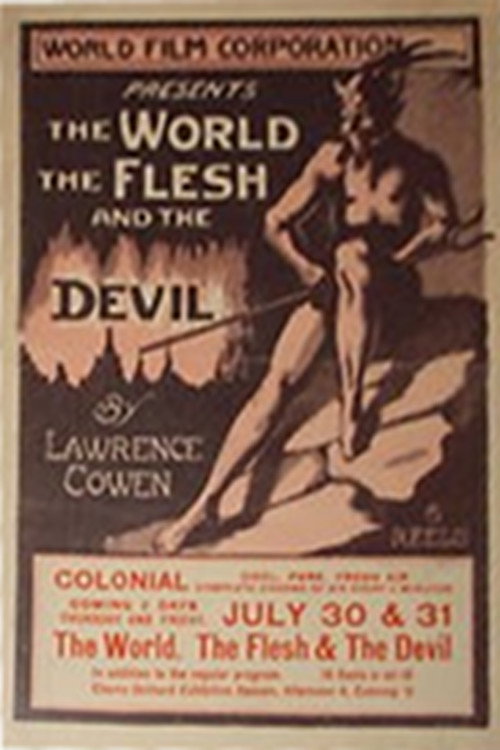
The World, the Flesh and the Devil 1914
Step into the gripping drama of *The World, the Flesh and the Devil (1914)*, a silent-era crime thriller directed by F. Martin Thornton that weaves a tale of deception, mistaken identity, and societal contrasts.
Director: F. Martin Thornton
Cast
Frequently Asked Questions
What is *The World, the Flesh and the Devil* (1914) about?
The film centers on a woman's failed plot to switch babies from rich and poor families, leading to decades of mistaken identity. When the switched child grows up believing he's wealthy, he confronts the man he was raised to replace, uncovering a cycle of deception and class-driven conflict.
Who directed *The World, the Flesh and the Devil*?
F. Martin Thornton directed this silent-era drama, which showcases his skill in crafting suspenseful, socially charged narratives.
Who stars in *The World, the Flesh and the Devil*?
The film features Stella St. Audrie in a key role, with the cast rounding out this silent-era drama.
Is *The World, the Flesh and the Devil* (1914) worth watching?
While lacking an IMDb rating, this 50-minute silent film offers a compelling exploration of identity and class, making it a fascinating watch for fans of early cinema and historical drama. Its tight runtime and moral complexities ensure it holds up surprisingly well today.
How long is *The World, the Flesh and the Devil*?
The film has a runtime of 50 minutes.
About The World, the Flesh and the Devil (1914) — A Silent-Era Drama of Mistaken Identity and Social Divide
Step into the gripping drama of *The World, the Flesh and the Devil (1914)*, a silent-era crime thriller directed by F. Martin Thornton that weaves a tale of deception, mistaken identity, and societal contrasts. The film follows a woman consumed by unhappiness who plots to swap the babies of a wealthy and a poor family, only for her hired nurse to thwart the scheme. Decades later, the switched child—raised to believe he's heir to riches—discovers the truth and confronts the man he was raised to replace, unraveling a web of identity and class conflict. Thornton crafts an atmospheric narrative steeped in moral ambiguity and psychological tension, reflecting the era's fascination with social divides and human frailty.
At its core, *The World, the Flesh and the Devil* explores the fragility of perception and the consequences of dishonesty, all set against a backdrop of early 20th-century drama. With a runtime of just 50 minutes, the film packs emotional weight into a tight, suspenseful package, making it a standout in silent cinema. Its themes of betrayal and redemption resonate even today, offering a glimpse into the storytelling techniques of the past while delivering a story that feels timeless.