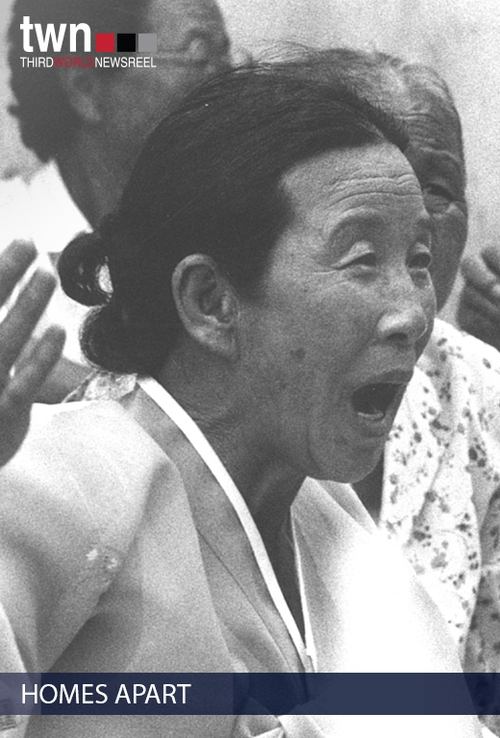
Homes Apart: Korea 1991
Directed by Christine Choy, *Homes Apart: Korea* (1991) is a powerful 56-minute documentary that explores the human toll of Korea's division after the Korean War.
Director: Christine Choy
Frequently Asked Questions
What is Homes Apart: Korea (1991) about?
*Homes Apart: Korea* follows one Korean man's emotional journey to reunite with his sister in North Korea, decades after the Korean War left millions of families separated. The film contrasts this personal struggle with the broader political reality of the Korean Peninsula's division, capturing the lingering fear and uncertainty faced by families on both sides of the DMZ. Through intimate interviews and striking visuals, it paints a poignant picture of a shared heritage fractured by conflict.
Who directed Homes Apart: Korea?
Christine Choy directed *Homes Apart: Korea* (1991), bringing her signature documentary style to this emotionally charged exploration of division and hope.
Who stars in Homes Apart: Korea?
The documentary centers on one man's quest to reunite with his sister, with additional personal stories and interviews shaping its narrative.
Is Homes Apart: Korea (1991) worth watching?
As a 56-minute documentary from 1991, *Homes Apart: Korea* offers a rare, humanized perspective on the Korean Peninsula's division—long before modern documentaries tackled the topic. While it doesn't have an IMDb rating, its historical significance and emotional depth make it compelling for viewers interested in Cold War-era stories or Korean history. Just keep in mind it's more of a time capsule than a polished modern production.
How long is Homes Apart: Korea?
*Homes Apart: Korea* runs for 56 minutes.
🎥 Trailer
About Homes Apart: Korea (1991) — A documentary on Korea's divided families and the cost of war
Directed by Christine Choy, *Homes Apart: Korea* (1991) is a powerful 56-minute documentary that explores the human toll of Korea's division after the Korean War. Through the story of one man's desperate attempt to reunite with his sister in North Korea, the film peels back the layers of a shared culture and language fractured by politics. By the early 1990s, as global Cold War tensions thawed elsewhere, Koreans on both sides of the DMZ remained trapped in a state of mutual fear and separation. Choy's lens captures the emotional weight of families torn apart, weaving personal narratives with the broader geopolitical reality that kept them apart for decades.
The documentary's atmospheric storytelling transforms dry historical context into urgent, intimate cinema. By focusing on the individual quest for reunion, it humanizes the abstract divisions of nations, making the stakes feel visceral. Shot in the late Cold War era but released just as the world moved on, *Homes Apart: Korea* stands as a haunting time capsule—a reminder of how far-reaching conflicts can fragment lives in ways that endure long after the guns fall silent.