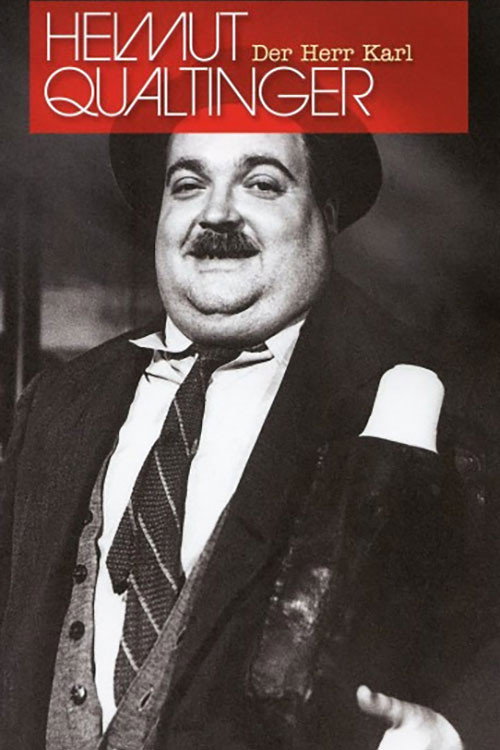
Der Herr Karl 1967
Meet Der Herr Karl (1967), a sharp Austrian comedy that unpacks the life of its opportunistic antihero through a wry monologue set in a deli warehouse.
Director: Erich Neuberg
Cast
Frequently Asked Questions
What is Der Herr Karl (1967) about?
This Austrian comedy follows the life of Karl, a self-interested opportunist who recounts his survival through Austria's shifting political landscape. Set in a deli warehouse, his monologue reveals a man who bends with every regime change, exposing the moral gray areas of personal ambition.
Who directed Der Herr Karl?
Erich Neuberg directed Der Herr Karl, crafting a minimalist yet impactful cinematic experience that highlights Helmut Qualtinger's standout performance.
Who stars in Der Herr Karl?
The film stars Helmut Qualtinger in the title role, delivering a solo performance that anchors the narrative with biting wit and unsettling charm.
Is Der Herr Karl (1967) worth watching?
Though unrated on IMDb, Der Herr Karl is a hidden gem for fans of sharp satire and historical character studies. Its 60-minute runtime packs a punch, offering a uniquely Austrian perspective on moral compromise that feels as relevant today as it did in 1967.
How long is Der Herr Karl?
Der Herr Karl runs for 60 minutes.
About Der Herr Karl (1967) — A Dark Comedy of Moral Compromise in Post-War Austria
Meet Der Herr Karl (1967), a sharp Austrian comedy that unpacks the life of its opportunistic antihero through a wry monologue set in a deli warehouse. Directed by Erich Neuberg and brought to life by Helmut Qualtinger's razor-edged performance, this 60-minute gem traces one man's survival through Austria's turbulent 20th-century history—from the Great War to post-occupation stability. As Karl spins his tale for a young listener, his self-serving charm reveals a petty-bourgeois opportunist who bends with every political wind, exposing the moral compromises of everyday life.
Neuberg's minimalist staging and Qualtinger's magnetic narration create an atmosphere that's both darkly humorous and unsettling, blending satire with social critique. The film's biting wit and historical lens make it a compelling watch for fans of character-driven comedies and period dramas alike, offering a uniquely Austrian take on the consequences of adaptability and moral flexibility.