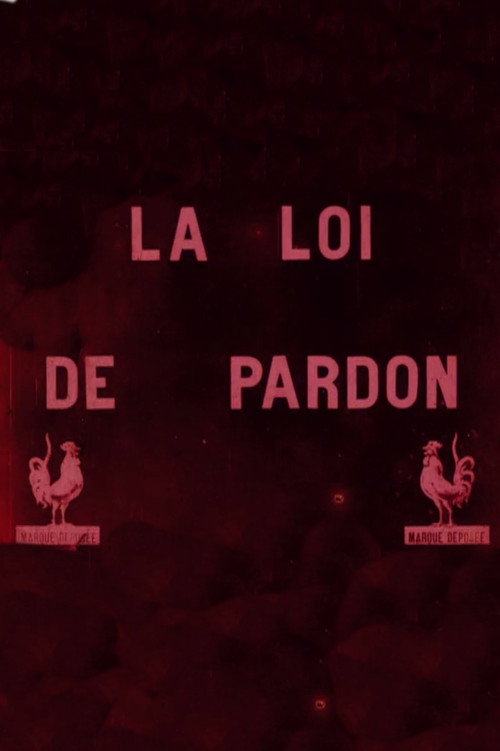
The Law of Forgiveness 1906
A concise yet profound early silent-era drama from 1906, *The Law of Forgiveness* directed by the visionary Albert Capellani explores the quiet power of redemption in a brief eight-minute narrative.
Director: Albert Capellani
Frequently Asked Questions
What is The Law of Forgiveness (1906) about?
This early silent drama follows a character confronting past mistakes and seeking redemption through forgiveness. Set in a stark, emotionally charged environment, the film contrasts guilt with the possibility of moral renewal. Though brief, its themes resonate with timeless human struggles.
Who directed The Law of Forgiveness?
The film was directed by Albert Capellani, a pioneering French filmmaker known for his contributions to early cinema's narrative techniques.
Who stars in The Law of Forgiveness?
Cast details for *The Law of Forgiveness* are not listed, leaving the performers anonymous but their impact undeniable.
Is The Law of Forgiveness (1906) worth watching?
While early silent films like this are more valuable for historical insight than modern entertainment, *The Law of Forgiveness* offers a fascinating look at cinematic storytelling in its infancy. Fans of silent-era dramas will appreciate its thematic depth despite its brevity.
How long is The Law of Forgiveness?
The runtime for *The Law of Forgiveness* is approximately 8 minutes.
🎥 Trailer
About The Law of Forgiveness (1906) — Discover the Early Silent Drama on Forgiveness and Redemption
A concise yet profound early silent-era drama from 1906, *The Law of Forgiveness* directed by the visionary Albert Capellani explores the quiet power of redemption in a brief eight-minute narrative. In this short film, themes of guilt and reconciliation unfold against the backdrop of early 20th-century society, where moral choices weigh heavily on the human spirit. The atmospheric setting—likely intimate and stark—heightens the emotional stakes as characters grapple with forgiveness, a timeless struggle that transcends eras. Capellani's direction likely emphasizes expression over dialogue, relying on visual storytelling to convey deep sentiment within a compact format. Though the cast remains unknown, the film's focus on human connection and moral reckoning invites viewers to reflect on their own capacity for grace. *The Law of Forgiveness (1906)* stands as a poignant artifact of early cinema, offering a snapshot of how storytelling evolved to embrace emotional complexity in just minutes.
As one of the earliest examples of narrative-driven silent cinema, this film reflects the artistic ambitions of its era. Its brevity belies its thematic depth, capturing a moment of moral reckoning that feels both intimate and universal. While much of its context has faded with time, the film's exploration of forgiveness remains relevant, resonating with audiences drawn to stories of personal transformation. For film historians and silent-era enthusiasts, *The Law of Forgiveness (1906)* offers a glimpse into the storytelling techniques that shaped modern cinema.