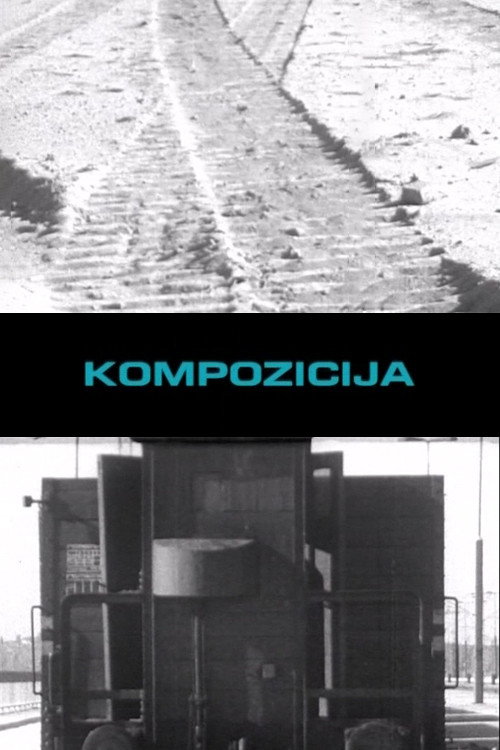
Composition 1970
Vjekoslav Nakić's *Composition (1970)* is a bold, experimental short film that strips cinema down to its most elemental form.
Director: Vjekoslav Nakić
Frequently Asked Questions
What is Composition (1970) about?
*Composition* is an experimental documentary that focuses on static shots of stationary train wagons, exploring themes of repetition, visual balance, and the cyclical nature of time. The film uses a looping soundtrack to reinforce its hypnotic, meditative quality.
Who directed Composition?
The film was directed by Vjekoslav Nakić, a Serbian filmmaker known for pushing the boundaries of experimental cinema.
Who stars in Composition?
Director information is not available.
Is Composition (1970) worth watching?
As an unrated experimental short, *Composition* isn't for everyone, but it's a fascinating time capsule of 1970s avant-garde filmmaking. Its minimalist approach rewards viewers who appreciate abstract, thought-provoking cinema.
How long is Composition?
The runtime is approximately 6 minutes.
About Composition (1970) — A Six-Minute Avant-Garde Study of Trains, Sound, and Serene Repetition
Vjekoslav Nakić's *Composition (1970)* is a bold, experimental short film that strips cinema down to its most elemental form. Shot entirely in static frames, it trains its lens on the quiet majesty of stationary train wagons, transforming mundane industrial subjects into a study of composition itself. The film's title is a masterstroke of linguistic play, weaving together three distinct meanings in Serbian: the arrangement of train cars (*composition* as a convoy), the balance of visual elements within each shot (*composition* as framing), and the looping rhythm of its soundtrack—a five-second audio loop that repeats like an obsessive musical motif. The result is a hypnotic, almost meditative experience that challenges viewers to find beauty in repetition and stillness.
Beneath its minimalist surface, *Composition* invites deeper reflection on how we perceive time and space in film. The absence of a traditional narrative or character development forces the audience to engage with the raw textures of the image and sound, evoking a sense of serene detachment. Nakić's work feels like a visual poem, where the train wagons become both subject and metaphor, suggesting journeys paused or destinations endlessly deferred. For fans of avant-garde cinema, this six-minute gem offers a rare blend of intellectual provocation and sensory immersion.