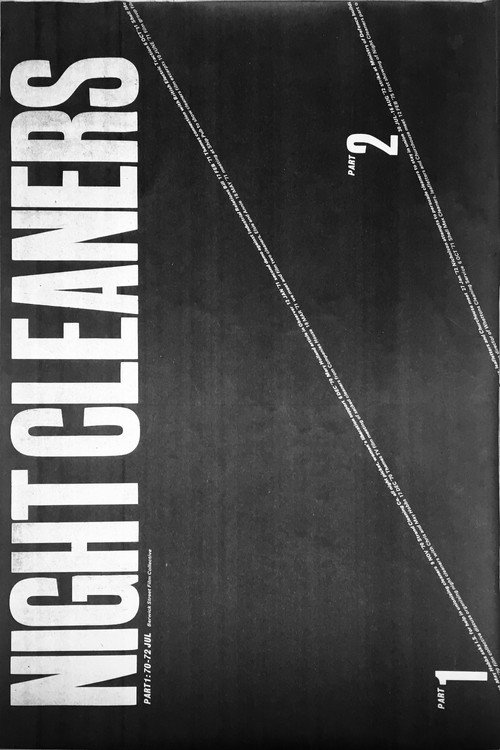
The Nightcleaners 1975
Dive into *The Nightcleaners (1975)*, a groundbreaking documentary directed by James Scott that captures the raw struggle of night-shift office cleaners fighting for fair wages and union recognition during the early 1970s.
Director: James Scott
Frequently Asked Questions
What is *The Nightcleaners (1975)* about?
*The Nightcleaners* follows the real-life fight to unionize women who cleaned London offices at night, exposing their exploitation and the political battles they waged. The film captures the messy, unpredictable nature of activism, where solidarity isn't guaranteed and victories are hard-won.
Who directed *The Nightcleaners*?
James Scott directed *The Nightcleaners*, crafting a documentary that blends activism with avant-garde filmmaking techniques.
Who stars in *The Nightcleaners*?
The documentary centers on the women night cleaners themselves, the Cleaners' Action Group, and union organizers, though specific cast names aren't listed.
Is *The Nightcleaners (1975)* worth watching?
As a documentary, *The Nightcleaners* offers more than just historical insight—it's a revelatory look at labor rights and grassroots movements. While it lacks a traditional rating, its significance as a political film makes it a must-watch for fans of socially conscious cinema.
How long is *The Nightcleaners*?
The film runs for 90 minutes.
About The Nightcleaners (1975) — The Documentary That Chronicled Labor's Fight for Fairness
Dive into *The Nightcleaners (1975)*, a groundbreaking documentary directed by James Scott that captures the raw struggle of night-shift office cleaners fighting for fair wages and union recognition during the early 1970s. This isn't just a film—it's a testament to grassroots activism, unfolding amid the gritty backdrop of London's office towers and the unyielding spirit of the women who kept them gleaming. The documentary immerses viewers in the tense dynamics between workers, activists, and unions, revealing the unexpected complexities of their campaign and the power of collective action.
James Scott's innovative approach blends observational realism with political urgency, creating a cinematic experience that challenges passive viewing. The film's atmosphere crackles with tension as it documents the human cost of exploitation and the fragile threads of solidarity binding the cleaners together. *The Nightcleaners (1975)* isn't just about a labor dispute—it's a mirror held up to society, asking who truly benefits from silent, invisible labor.