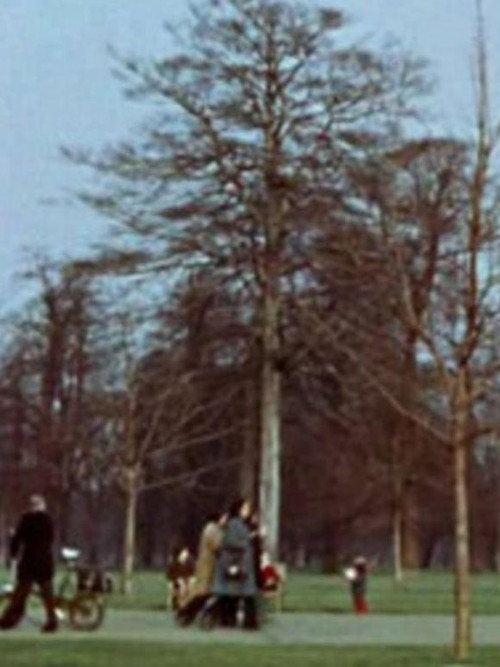
Park Film 1973
Chris Welsby's *Park Film* (1973) is less a traditional documentary and more a poetic experiment in urban ecology, where the camera itself becomes a living presence in the park.
Director: Chris Welsby
Frequently Asked Questions
What is Park Film (1973) about?
*Park Film* (1973) explores the dynamic relationship between a park and its surrounding city through the eyes of an active, responsive camera. Rather than documenting passersby, the film frames the park as a living entity shaped by both nature and urban forces. Its abstract yet meditative style turns a routine setting into a visual symphony of movement and light.
Who directed Park Film?
Chris Welsby directed *Park Film* (1973), a landmark work in experimental cinema that redefines how we perceive public spaces.
Who stars in Park Film?
As an avant-garde short film, *Park Film* (1973) does not feature traditional actors. Its cast is the city itself—passersby, architecture, and the park's shifting light.
Is Park Film (1973) worth watching?
*Park Film* (1973) is a niche but fascinating watch for fans of experimental cinema and urban studies. At just 8 minutes long, its minimalist approach rewards viewers seeking thoughtful, atmospheric filmmaking over conventional storytelling. While not mainstream, its poetic take on space and perception makes it a standout in 1970s experimental film.
How long is Park Film?
Park Film (1973) has a runtime of 8 minutes.
About Park Film (1973): Chris Welsby's Experimental Urban Poem
Chris Welsby's *Park Film* (1973) is less a traditional documentary and more a poetic experiment in urban ecology, where the camera itself becomes a living presence in the park. Unlike a static observer or a mechanical eye, the lens responds to passersby, its movements mirroring the rhythms of the city that envelops the green space. The film captures fleeting moments of connection between people, place, and environment, transforming an everyday setting into a meditative study of coexistence. Through subtle shifts in perspective and timing, Welsby crafts a work that feels both intimate and detached, inviting viewers to reconsider how we perceive the spaces we share.
This short but striking film blends avant-garde techniques with a quiet, observational tone, offering a fresh lens on public space. Its experimental approach challenges conventional narrative filmmaking, focusing instead on atmosphere and the interplay between nature and urban life. For fans of conceptual cinema, *Park Film* (1973) is a compact yet evocative piece that lingers in the mind long after its brief runtime.