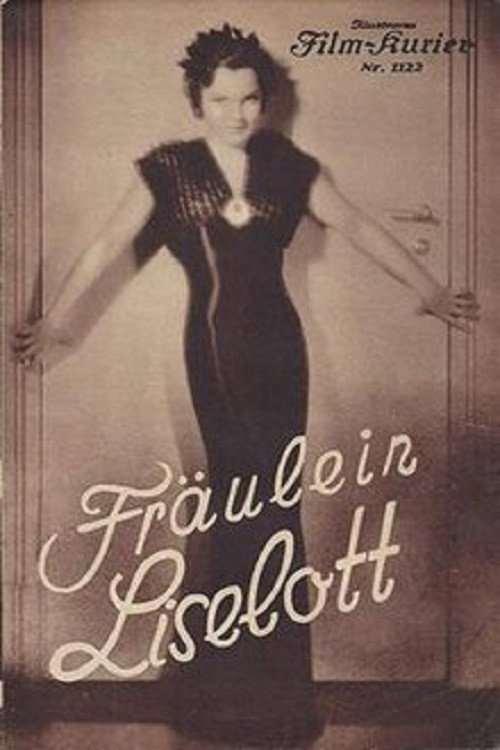
Miss Liselott 1934
Dive into the intriguing world of *Miss Liselott (1934)*, a German comedy that blends satire with the unmistakable tensions of its era.
Director: Johannes Guter
Cast








Frequently Asked Questions
What is Miss Liselott (1934) about?
*Miss Liselott (1934)* follows a group of aimless bohemians who face pressure to embrace work (*Arbeit*) as a path to salvation, all while navigating the shifting social and political landscape of 1930s Germany. The film uses comedy to explore themes of purpose, conformity, and the tension between individuality and societal expectations.
Who directed Miss Liselott?
The film was directed by Johannes Guter, a German filmmaker known for his work during the early decades of cinema.
Who stars in Miss Liselott?
The film stars Magda Schneider as the titular Liselott, alongside Albert Lieven, Günther Lüders, Oskar Sima, and Paul Westermeier.
Is Miss Liselott (1934) worth watching?
While *Miss Liselott (1934)* may not be a timeless classic, it offers a fascinating glimpse into mid-1930s German cinema, blending comedy with subtle social commentary. Fans of historical films or those interested in the intersection of entertainment and propaganda will likely find it intriguing.
How long is Miss Liselott?
Runtime details are not listed.
About Miss Liselott (1934) — A Satirical Comedy from Pre-War Germany
Dive into the intriguing world of *Miss Liselott (1934)*, a German comedy that blends satire with the unmistakable tensions of its era. Directed by Johannes Guter, this film follows a group of aimless bohemians who find themselves nudged—some might say pushed—toward the virtues of *Arbeit* (work) under the watchful eye of a rising political climate. The story unfolds with a mix of lighthearted humor and subtle undertones, painting a satirical portrait of societal norms while navigating the complexities of pre-war Germany. With Magda Schneider leading the cast as Liselott, the film balances charm and critique, offering a glimpse into how entertainment and propaganda often intertwined in 1930s cinema.
Set against the backdrop of mid-1930s Germany, *Miss Liselott (1934)* captures a moment where laughter and ideology weren't always mutually exclusive. The comedy genre provides a deceptive veneer, masking deeper themes about purpose, conformity, and the shifting sands of societal expectations. Schneider's performance shines as she embodies a character caught between her free-spirited inclinations and the pressures of a changing world. While the film's tone may feel dated by modern standards, it remains a fascinating relic—a snapshot of a time when cinema wasn't just entertainment but also a tool for social commentary, however unintentional.