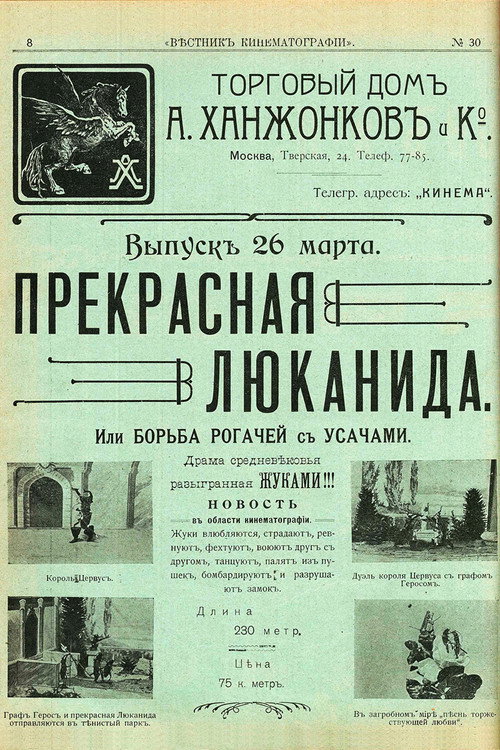
The Beautiful Leukanida 1912
Władysław Starewicz's *The Beautiful Leukanida* (1912) is a silent-era marvel blending drama and animation in a whimsical tale of rivalry among insects.
Director: Władysław Starewicz
Frequently Asked Questions
What is The Beautiful Leukanida (1912) about?
The film follows two competing insects who battle for the attention of a stunning ladybug, turning their rivalry into a lighthearted yet dramatic spectacle. Think of it as a romantic comedy scaled down to the insect world, filled with charm and visual wit.
Who directed The Beautiful Leukanida?
The film was directed by Władysław Starewicz, a pioneer of stop-motion animation who brought inanimate objects to life with astonishing creativity.
Who stars in The Beautiful Leukanida?
Cast details for *The Beautiful Leukanida* are not listed, as the characters are animated insects brought to life by Starewicz's groundbreaking techniques.
Is The Beautiful Leukanida (1912) worth watching?
While it's a historical curiosity rather than a modern blockbuster, *The Beautiful Leukanida* shines as an early example of animation's storytelling potential. Its playful tone and technical innovation make it a rewarding watch for fans of silent cinema or vintage animation.
How long is The Beautiful Leukanida?
The film runs for just 9 minutes, making it a quick but delightful experience perfect for a nostalgic film session.
About The Beautiful Leukanida (1912) — The Early Stop-Motion Romance You Need to See
Władysław Starewicz's *The Beautiful Leukanida* (1912) is a silent-era marvel blending drama and animation in a whimsical tale of rivalry among insects. Set against a dreamlike backdrop, the short film follows two determined suitors vying for the affection of a radiant ladybug, their competitive antics unfolding like a miniature romantic epic. Starewicz's pioneering stop-motion techniques lend the story a tactile charm, transforming simple insect movements into captivating drama.
At just nine minutes long, the film is a snapshot of early cinema's experimental spirit, where nature becomes a stage for human-like emotions—jealousy, pride, and longing. The delicate visuals and playful tone create an atmosphere of nostalgic enchantment, making it a fascinating relic for animation enthusiasts and silent film historians alike.