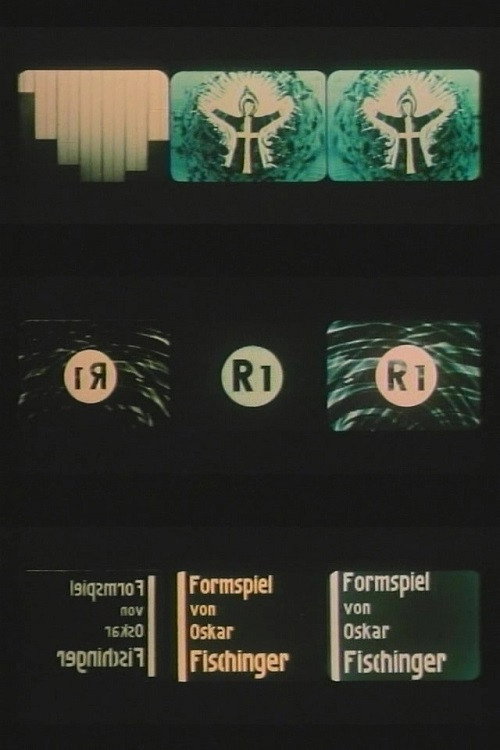
R-1 1927
A silent-era marvel from 1927, *R-1* showcases Oskar Fischinger's pioneering vision in animation, blending geometric precision with rhythmic motion.
Director: Oskar Fischinger
Frequently Asked Questions
What is R-1 (1927) about?
This short film is an abstract exploration of shapes and movements, where geometric forms interact in a rhythmic dance. It captures the essence of early animation's artistic potential, blending industrial aesthetics with silent-era storytelling.
Who directed R-1?
R-1 was directed by Oskar Fischinger, a trailblazer in abstract animation whose work bridged the gap between experimental film and commercial cinema.
Who stars in R-1?
Cast details for R-1 are not listed, as it's an abstract animation focusing solely on visual artistry rather than performers.
Is R-1 (1927) worth watching?
As a silent-era animation pioneer, R-1 offers a unique glimpse into the medium's early artistic ambitions. While not a narrative film, its visual rhythm and historical significance make it a rewarding watch for fans of experimental cinema.
How long is R-1?
R-1 has a runtime of 7 minutes.
About R-1 (1927) — The Pioneering Abstract Animation You Need to See
A silent-era marvel from 1927, *R-1* showcases Oskar Fischinger's pioneering vision in animation, blending geometric precision with rhythmic motion. This seven-minute short explores the interplay between shape and sound before synchronized audio became standard, delivering a hypnotic dance of lines and forms that feels both futuristic and timeless. The film's minimalist design and abstract storytelling create an immersive experience, evoking the mechanical pulse of an industrial age on the cusp of technological revolution.
Directed by the visionary Oskar Fischinger, *R-1 (1927)* stands as a testament to early animation's artistic ambition, pushing boundaries with its avant-garde approach. Though cast details remain elusive, Fischinger's signature style—later influencing generations of filmmakers—shines through in every frame. The film's atmospheric tension lies in its ability to communicate emotion through pure visual rhythm, making it a hidden gem for cinephiles and animation historians alike.