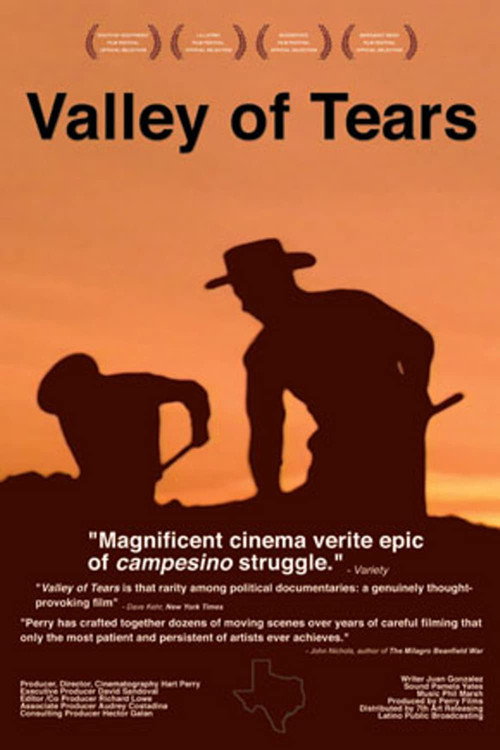
Valley of Tears 2003
Valley of Tears (2003) offers an intimate documentary portrait of Raymondville, a small Texas town where the struggles of farmworkers unfold against the backdrop of vast agricultural fields.
Director: Hart Perry
Frequently Asked Questions
What is Valley of Tears (2003) about?
The documentary follows community organizers and farmworkers in Raymondville, Texas as they battle wealthy landowners and political resistance over twenty years. It chronicles both triumphs and setbacks in their fight for social justice and workers' rights.
Who directed Valley of Tears?
Hart Perry directed this documentary feature, spending over two decades documenting the lives and struggles of Raymondville residents.
Who stars in Valley of Tears?
As a documentary film, Valley of Tears features local residents, farmworkers, and community activists rather than traditional actors in starring roles.
Is Valley of Tears (2003) worth watching?
Yes, this documentary provides valuable insight into American labor history and grassroots activism. Though unrated on IMDb, Perry's twenty-year dedication to capturing authentic stories makes it compelling viewing for documentary enthusiasts.
How long is Valley of Tears?
Runtime details are not listed for this documentary feature
About Valley of Tears (2003) — Documentary Chronicles Farmworker Activism
Valley of Tears (2003) offers an intimate documentary portrait of Raymondville, a small Texas town where the struggles of farmworkers unfold against the backdrop of vast agricultural fields. Director Hart Perry spent two decades chronicling the determined efforts of community organizers and activists as they challenged powerful landowners and an entrenched political system. The film captures both hard-won victories and bitter defeats, painting a complex picture of rural American life in the late 20th century.
Through extensive footage and interviews, Perry reveals the human cost of labor disputes and the resilience of working-class families fighting for dignity. The documentary explores themes of social justice, economic inequality, and grassroots organizing, creating an atmospheric study of how ordinary people confront extraordinary challenges. Valley of Tears (2003) serves as both historical record and testament to the enduring spirit of community activism in the American Southwest.
This compelling documentary film runs approximately ninety minutes and features perspectives from local residents and organizers. While specific cast information remains limited, the voices captured in Perry's work provide authentic insight into decades of struggle. Available for streaming or download across multiple platforms, Valley of Tears (2003) stands as essential viewing for those interested in American labor history and documentary storytelling.