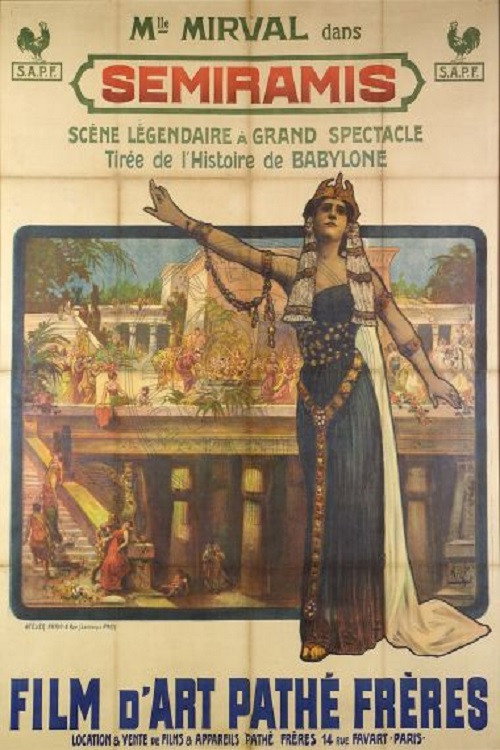
Sémiramis 1910
Camille de Morlhon's *Sémiramis* (1910) transports viewers to the legendary landscapes of ancient Babylon, where power, ambition, and destiny collide in this silent-era drama.
Director: Camille de Morlhon
Cast

Frequently Asked Questions
What is *Sémiramis* (1910) about?
This silent-era drama follows the legendary Queen Semiramis as she navigates the treacherous waters of Babylonian politics. Her journey intertwines ambition, love, and sacrifice against the backdrop of a grand empire. The film blends myth and history in a visually striking narrative.
Who directed *Sémiramis*?
The film was directed by Camille de Morlhon, a pioneering figure in early French cinema known for his historical and dramatic works.
Who stars in *Sémiramis*?
The film features Stacia Napierkowska in the lead role of Queen Semiramis, supported by Paul Capellani and Yvonne Mirval in key supporting parts.
Is *Sémiramis* (1910) worth watching?
While a silent-era drama from 1910, *Sémiramis* offers a fascinating glimpse into early cinematic storytelling and historical representation. Its short runtime and dramatic themes make it a curious watch for silent film enthusiasts, though modern audiences may find its pacing and style a departure from contemporary standards.
How long is *Sémiramis*?
The film runs for 16 minutes, making it a concise yet impactful silent-era drama.
About Sémiramis (1910) — Silent-Era Queen Drama from Early Cinema
Camille de Morlhon's *Sémiramis* (1910) transports viewers to the legendary landscapes of ancient Babylon, where power, ambition, and destiny collide in this silent-era drama. Starring Stacia Napierkowska as the enigmatic Queen Semiramis, the film explores the complexities of leadership through a blend of political intrigue and personal sacrifice. The atmospheric cinematography and dramatic performances immerse audiences in a world of opulence and conflict, where every decision shapes an empire. Set against the backdrop of towering ziggurats and bustling marketplaces, *Sémiramis* captures the essence of mythological grandeur with a touch of contemporary resonance.
As one of the earliest cinematic adaptations of the legendary Assyrian queen's story, the 1910 film offers a glimpse into the storytelling techniques of early French cinema. With Napierkowska's commanding presence and de Morlhon's meticulous direction, the movie blends historical spectacle with intimate human drama, making it a fascinating watch for silent film enthusiasts and history buffs alike. The short runtime belies its ambitious scope, delivering a compact yet rich cinematic experience that lingers long after the final frame.