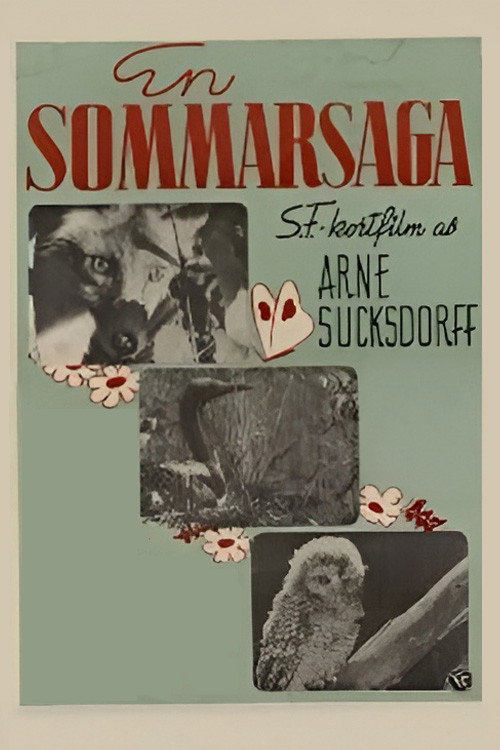
Summer's Tale 1941
Arne Sucksdorff's groundbreaking nature documentary *Summer's Tale (1941)* transports viewers into the heart of a Swedish forest, where a playful fox cub embarks on a journey of discovery.
Director: Arne Sucksdorff
Frequently Asked Questions
What is Summer's Tale (1941) about?
*Summer's Tale* follows a young fox cub as he explores the Swedish forest, discovering both the joys of play and the inevitability of predation. The film captures nature's duality—its beauty and cruelty—through intimate cinematography and rhythmic editing. Sucksdorff's documentary blends enchantment with realism, offering a glimpse into the untamed world of wildlife.
Who directed Summer's Tale?
Arne Sucksdorff directed *Summer's Tale (1941)*, marking his first film for Svensk Filmindustri. He later became renowned for his nature documentaries and won an Academy Award for *The Great Adventure*.
Who stars in Summer's Tale?
The film features a young fox cub as its main protagonist, with no credited human cast.
Is Summer's Tale (1941) worth watching?
Though unrated on IMDb, *Summer's Tale* is a must-watch for fans of documentary cinema and nature films. Its stunning visuals and poignant storytelling make it a timeless short that continues to captivate audiences over 80 years after its release. The film's brevity belies its emotional and artistic depth.
How long is Summer's Tale?
*Summer's Tale* runs for 12 minutes.
About Summer's Tale (1941) — Arne Sucksdorff's Lyrical Masterpiece of Nature's Cycle
Arne Sucksdorff's groundbreaking nature documentary *Summer's Tale (1941)* transports viewers into the heart of a Swedish forest, where a playful fox cub embarks on a journey of discovery. Through Sucksdorff's masterful lens, the film weaves enchanting moments of youthful curiosity with the stark realities of survival, portraying the raw beauty and harshness of nature in equal measure. Shot with rhythmic precision and lush close-ups of fur, eyes, and rustling foliage, the short film captures the delicate balance of life through the eyes of its tiny protagonist. Its poetic yet unsentimental storytelling resonated deeply with audiences, cementing Sucksdorff's reputation as a pioneer of Swedish documentary cinema.
*Summer's Tale (1941)* stands as a testament to the power of observational filmmaking, blending lyrical visuals with an unflinching gaze at nature's cycles. The film's evocative imagery, from dappled sunlight filtering through leaves to the intense focus on the fox cub's instincts, immerses the viewer in a world where every moment is charged with tension and wonder. Sucksdorff's innovative techniques and sensory-rich approach transformed this 12-minute short into a cultural touchstone, celebrated for its authenticity and artistry.