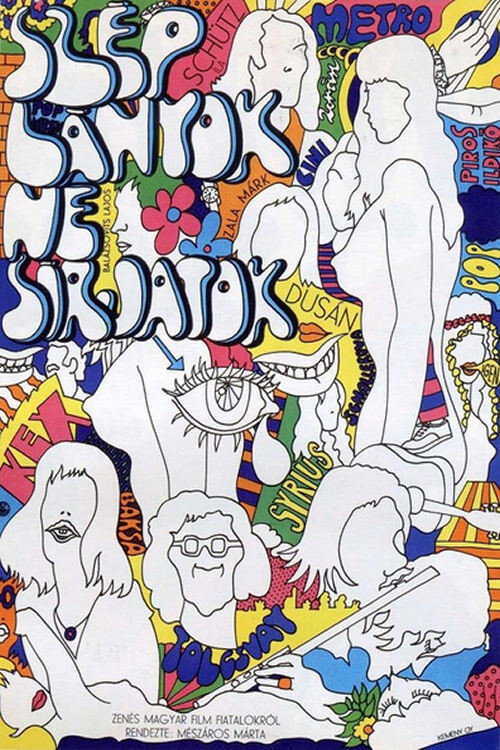
Don’t Cry, Pretty Girls! 1970
Directed by Márta Mészáros, *Don't Cry, Pretty Girls!* (1970) immerses viewers in the restless energy of 1970s Budapest, where young workers Savanyú and his friends navigate the gritty realities of factory life and the fleeting joys of nightlife.
Director: Márta Mészáros
Cast







Frequently Asked Questions
What is *Don't Cry, Pretty Girls!* (1970) about?
This 1970 drama follows Savanyú and his friends as they balance monotonous factory jobs with the vibrant, often chaotic energy of nightlife. Their quest for a shared space—whether a home or a moment of happiness—collides with the harsh realities of post-war Hungary.
Who directed *Don't Cry, Pretty Girls!?
Márta Mészáros, a Hungarian filmmaker known for her socially conscious and emotionally resonant storytelling, directed this film.
Who stars in *Don't Cry, Pretty Girls!?
The film features Jaroslava Schallerová, Kati Sír, Márk Zala, Lajos Balázsovits, and Péter Blaskó in key roles.
Is *Don't Cry, Pretty Girls!* (1970) worth watching?
While it lacks an IMDb rating, this understated drama offers a gripping snapshot of 1970s youth culture, blending intimate character studies with atmospheric music sequences. Its themes of resilience and longing make it a compelling watch for fans of character-driven cinema.
How long is *Don't Cry, Pretty Girls!?
The film runs for 84 minutes.
About Don't Cry, Pretty Girls! (1970) — A raw 1970s drama of youth, music, and fleeting freedom
Directed by Márta Mészáros, *Don't Cry, Pretty Girls!* (1970) immerses viewers in the restless energy of 1970s Budapest, where young workers Savanyú and his friends navigate the gritty realities of factory life and the fleeting joys of nightlife. After exhausting shifts at a plant, they chase moments of escape through pulsating concerts and crowded parties, their dreams of togetherness constantly thwarted by the bleakness of their surroundings. The film captures the raw, unfiltered spirit of a generation torn between obligation and desire, exploring themes of youthful disillusionment and the search for autonomy in a constrained world.
Mészáros crafts a poignant portrait of post-war Hungary through the lens of personal longing, blending drama with evocative musical sequences that underscore the characters' emotional turmoil. With its stark visuals and authentic performances, the film resonates with anyone who's ever felt the weight of societal expectations while chasing the ephemeral promise of freedom and connection.