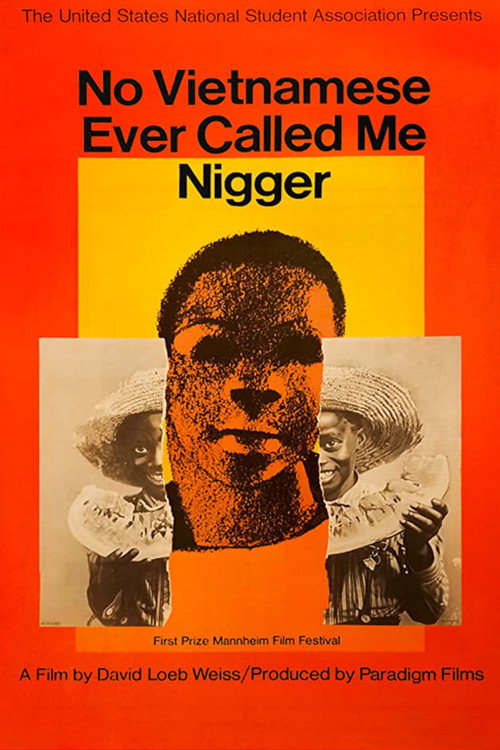
No Vietnamese Ever Called Me Nigger 1968
Step into the charged atmosphere of 1960s New York with *No Vietnamese Ever Called Me Nigger (1968)*, a raw and urgent documentary that captures the fiery spirit of resistance during the Vietnam War era.
Director: David Loeb Weiss
Frequently Asked Questions
What is *No Vietnamese Ever Called Me Nigger* (1968) about?
This documentary captures the electric energy of an anti-Vietnam War rally held in New York during 1967, framing it through the lens of racial and political awakening. It's a vivid portrayal of a moment when ordinary people rose up against injustice, inspired by figures like Muhammad Ali.
Who directed *No Vietnamese Ever Called Me Nigger*?
The film was directed by David Loeb Weiss, a filmmaker whose work often delved into social and political themes of his time.
Who stars in *No Vietnamese Ever Called Me Nigger*?
While the cast list isn't widely documented, the film prominently features the voices and presence of anti-war protesters and activists from the 1967 rally.
Is *No Vietnamese Ever Called Me Nigger* (1968) worth watching?
As a raw and unfiltered glimpse into a pivotal era of activism, this documentary holds significant historical value. Its gritty realism and thematic depth make it a compelling watch for those interested in 1960s counterculture or the intersection of civil rights and anti-war movements.
How long is *No Vietnamese Ever Called Me Nigger*?
The film runs for 86 minutes, offering a concise but impactful exploration of its subject matter.
About No Vietnamese Ever Called Me Nigger (1968) — A raw 1960s documentary of protest and defiance
Step into the charged atmosphere of 1960s New York with *No Vietnamese Ever Called Me Nigger (1968)*, a raw and urgent documentary that captures the fiery spirit of resistance during the Vietnam War era. Directed by David Loeb Weiss, this compelling film immerses viewers in an anti-war rally where the voices of dissent echo with passion and defiance. The documentary's title is inspired by a bold declaration from boxing legend Muhammad Ali, who refused conscription by asserting that his true adversaries were the systemic injustices of his own country—a sentiment that underscores the film's exploration of racial and political divides. Weiss crafts a visual and emotional journey through the turbulent streets, blending archival footage with the unfiltered energy of the protest movement. The themes of civil rights, militarism, and solidarity pulse through every frame, offering a snapshot of a pivotal moment in American history.
At its core, *No Vietnamese Ever Called Me Nigger (1968)* is more than just a historical artifact—it's a testament to the power of collective action and the courage of those who dared to challenge the status quo. The documentary's grainy, documentary-style cinematography lends it an authenticity that transports viewers back to the late 1960s, when the air was thick with the tension of social change. Weiss's lens focuses not only on the chants and banners but also on the faces of the protesters, revealing the human stories behind the headlines. Whether you're a history buff, a documentary enthusiast, or someone seeking to understand the roots of modern activism, this film offers a gripping and insightful experience that resonates far beyond its runtime.