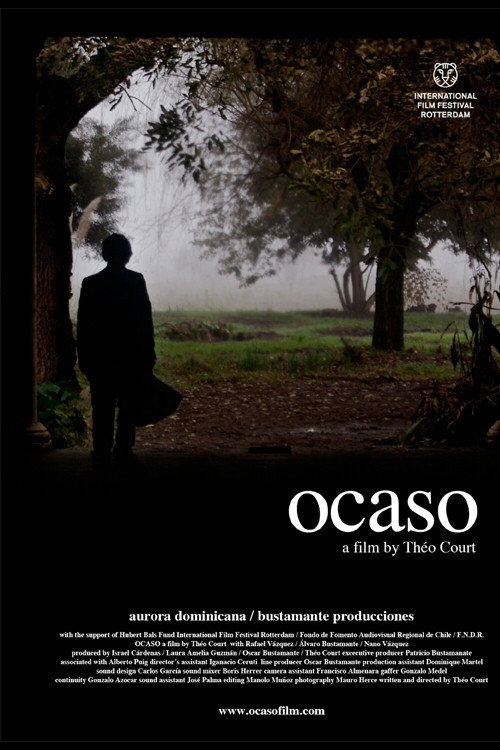
Ocaso 2010
Théo Court's *Ocaso (2010)* is a quietly devastating drama that unfolds within the crumbling walls of a once-grand farmhouse, where Rafael, an aging butler, clings to the rituals of a fading aristocratic past.
Director: Théo Court
Cast
Frequently Asked Questions
What is Ocaso (2010) about?
*Ocaso (2010)* follows Rafael, a lifelong butler in a once-prosperous farmhouse now reduced to a shadow of its former self. His devotion to maintaining the household's traditions becomes his only purpose, masking the harsh reality of decline. When the estate's collapse forces him to confront his own irrelevance, Rafael faces an uncertain journey toward the last remnants of his identity.
Who directed Ocaso?
Ocaso was directed by Chilean filmmaker Théo Court, known for his nuanced, atmospheric storytelling.
Who stars in Ocaso?
The film features Álvaro Bustamante in the lead role, with supporting performances by Rafael Vázquez Fajardo, Nano Vázquez, and Sergio Zuñiga.
Is Ocaso (2010) worth watching?
As a lean, 78-minute drama, *Ocaso (2010)* offers a deeply atmospheric experience for fans of slow-burn character studies. Its themes of memory, decay, and resilience make it a compelling watch for those who appreciate arthouse cinema, even without a rating on IMDb. The film's emotional resonance outweighs its brevity.
How long is Ocaso?
Ocaso runs for 78 minutes.
🎥 Trailer
About Ocaso (2010) — A butler's fading rituals in a decaying estate
Théo Court's *Ocaso (2010)* is a quietly devastating drama that unfolds within the crumbling walls of a once-grand farmhouse, where Rafael, an aging butler, clings to the rituals of a fading aristocratic past. His meticulously performed daily routines—polishing silver, arranging flowers, lighting candles—become the fragile threads holding together a household steeped in forgotten glory. As the estate decays around him, Rafael's role shifts from caretaker to prisoner of memory, his dignity eroded by time and neglect. The film's stark, contemplative atmosphere lingers like the scent of old wood and dust, capturing the bittersweet weight of legacy and the inevitability of letting go.
With a runtime just over an hour, *Ocaso (2010)* strips away excess to focus on raw humanism, blending psychological depth with visual poetry. Court's direction transforms the farmhouse into a character itself—a decaying relic mirroring Rafael's spiraling identity. The narrative's quiet intensity builds to a poignant climax, as Rafael's final act of defiance is as uncertain as the road ahead.