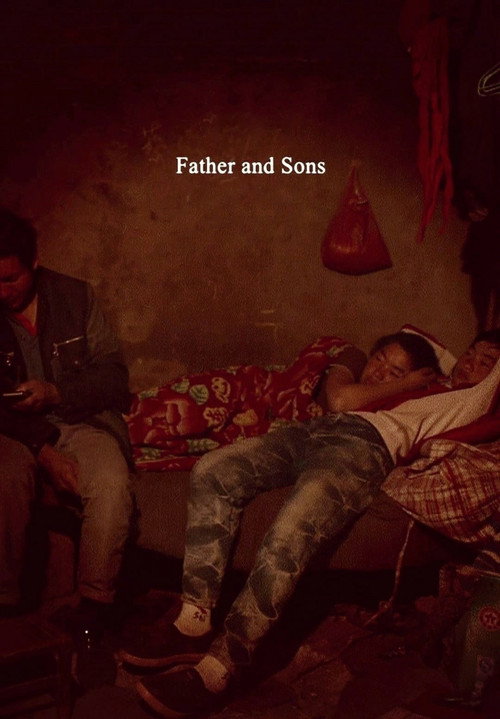
Father and Sons 2014
Chinese master of cinéma vérité Wang Bing's deeply moving documentary *Father and Sons* (2014) immerses viewers in the quiet struggle of a migrant laborer and his teenage boys after years apart.
Director: Wang Bing
Frequently Asked Questions
What is Father and Sons (2014) about?
Wang Bing's *Father and Sons* documents a stonemason's reunion with his teenage sons after four years apart, following their daily lives in a single, squalid room. The film captures their fragile relationship through mundane moments—silent meals, fleeting conversations, and the weight of unspoken expectations—revealing the quiet cost of economic survival.
Who directed Father and Sons?
Father and Sons was directed by Wang Bing, the acclaimed Chinese filmmaker known for his intimate, observational documentaries like *Three Sisters* and *West of the Tracks*.
Who stars in Father and Sons?
The documentary centers on Yonggao and Yongjin, the filmmaker's teenage subjects, alongside their father, a stonemason who left home in search of work.
Is Father and Sons (2014) worth watching?
With its stark realism and emotional depth, *Father and Sons* is a rewarding watch for fans of slow, immersive cinema. While it lacks the drama of mainstream documentaries, its quiet power and Wang Bing's signature style make it a compelling exploration of family bonds in adversity.
How long is Father and Sons?
Father and Sons has a runtime of 87 minutes.
About Father and Sons (2014) — A poetic documentary on family, absence, and quiet resilience
Chinese master of cinéma vérité Wang Bing's deeply moving documentary *Father and Sons* (2014) immerses viewers in the quiet struggle of a migrant laborer and his teenage boys after years apart. Shot in a single cramped room in Yunnan's Fumin county, the film captures the unspoken tensions and fragile bonds between a father who left to seek work and his sons who were left behind. Through long, patient takes, Wang Bing transforms everyday moments—shared meals, tense silences, fleeting gestures—into a poignant meditation on separation, resilience, and the quiet cost of economic survival. The director's signature observational style strips away artifice to reveal raw humanity in the most ordinary of spaces.
At its heart, *Father and Sons* is less about plot and more about presence—a testament to the enduring power of family ties even when frayed by time and hardship. The camera never judges, only witnesses, as Yonggao, Yongjin, and their father navigate the claustrophobia of poverty with a dignity that makes every glance and sigh feel like a story. For fans of immersive, dialogue-focused documentaries, this 87-minute film lingers long after the credits roll, a tribute to the resilience of human connection in the face of relentless change.