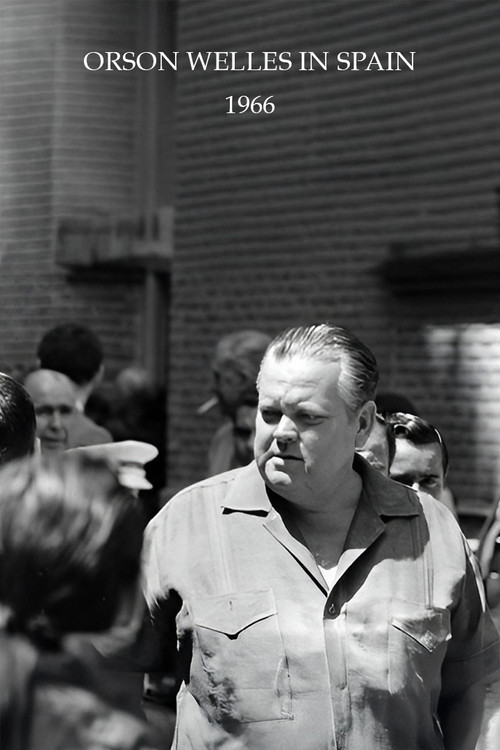
Orson Welles in Spain 1966
In 1966, legendary filmmaker Orson Welles steps into the spotlight in *Orson Welles in Spain*, a short documentary directed by Albert Maysles.
Director: Albert Maysles
Cast
Frequently Asked Questions
What is Orson Welles in Spain (1966) about?
The film documents Orson Welles presenting an unrealized film project to Spanish investors, envisioning a documentary-style drama centered on a lone matador. It blends Welles' musings on cinema and performance with the symbolic weight of bullfighting as a metaphor for existential struggle.
Who directed Orson Welles in Spain?
Albert Maysles directed this short documentary, capturing Welles' impassioned pitch in vivid detail.
Who stars in Orson Welles in Spain?
The sole credited figure is Orson Welles himself, delivering a captivating monologue that defines the film's narrative.
Is Orson Welles in Spain (1966) worth watching?
As a 10-minute time capsule of Welles' genius, the film offers more historical intrigue than pure entertainment. It's a must for cinephiles intrigued by his unfilmed projects, though its niche subject matter may limit broader appeal.
How long is Orson Welles in Spain?
The runtime is just 10 minutes, making it a quick but dense viewing experience.
About Orson Welles in Spain (1966) — Pitching an Unmade Bullfighting Epic by Welles
In 1966, legendary filmmaker Orson Welles steps into the spotlight in *Orson Welles in Spain*, a short documentary directed by Albert Maysles. The film captures Welles pitching an ambitious yet unrealized cinematic vision to a room of influential Spanish arts patrons, offering a rare glimpse into his creative process as he blends documentary realism with fictional storytelling.
Against the backdrop of bullfighting—a ritual steeped in tradition and existential weight—Welles envisions a solitary matador, a figure who defies convention both on and off the arena. As he dissects themes of performance, mortality, and artistic integrity, the documentary exudes a hypnotic atmosphere, blending Welles' magnetic intellect with Maysles' observational style. Though the proposed film never came to fruition, this 10-minute gem remains a compelling artifact of cinema history, ideal for fans of Welles' uncompromising artistry and early documentary aesthetics.