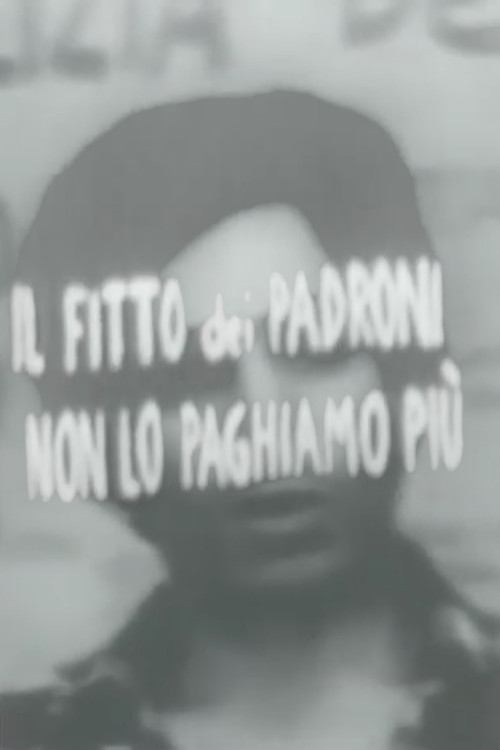
Il fitto dei padroni non lo paghiamo più 1972
Step into the gritty streets of Rome's Magliana district in the early 1970s with *Il fitto dei padroni non lo paghiamo più (1972)*, a raw and urgent documentary that captures the fiery spirit of grassroots resistance.
Director: Anna Lajolo
Frequently Asked Questions
What is *Il fitto dei padroni non lo paghiamo più (1972)* about?
This documentary dives into the grassroots movements in Rome's Magliana neighborhood, where residents took a stand against exploitative rent prices and poor living conditions. It's a vivid portrayal of collective resistance and the fight for dignity in 1970s Italy.
Who directed *Il fitto dei padroni non lo paghiamo più*?
The film was directed by Anna Lajolo, a filmmaker known for her socially conscious documentaries that give voice to marginalized communities.
Who stars in *Il fitto dei padroni non lo paghiamo più*?
The cast includes the real-life residents of Magliana and activists involved in the housing protests, though specific names are not widely documented.
Is *Il fitto dei padroni non lo paghiamo più (1972)* worth watching?
While it's a short documentary with no IMDb rating, its historical significance and raw portrayal of social justice make it a compelling watch for documentary enthusiasts and students of Italian social history. It's more about impact than entertainment, so viewers should go in with that in mind.
How long is *Il fitto dei padroni non lo paghiamo più*?
The film runs for 41 minutes.
About Il fitto dei padroni non lo paghiamo più (1972) — The 70s Housing Rebellion Caught on Film
Step into the gritty streets of Rome's Magliana district in the early 1970s with *Il fitto dei padroni non lo paghiamo più (1972)*, a raw and urgent documentary that captures the fiery spirit of grassroots resistance. Director Anna Lajolo turns her lens toward the working-class communities fighting against exploitative housing policies, painting a vivid portrait of solidarity in the face of systemic neglect. This 41-minute film pulses with the energy of protest, as residents band together to challenge landlords and demand fair living conditions, reflecting the broader social upheavals of the era. With its unflinching gaze and collective energy, Lajolo's documentary transcends mere historical record, becoming a time capsule of defiance and community-driven change.
*Il fitto dei padroni non lo paghiamo più* stands as a testament to the power of collective action, blending documentary realism with the raw emotion of those directly impacted. Lajolo's unobtrusive yet compelling direction immerses viewers in the daily struggles and triumphs of Magliana's residents, offering a window into a pivotal moment of urban activism. The film's themes of economic injustice and grassroots resistance resonate just as powerfully today, making it a compelling watch for anyone interested in the intersection of politics, society, and cinema. Whether you're a fan of documentaries or historical films, this short but impactful documentary delivers a slice of history that feels both urgent and timeless.