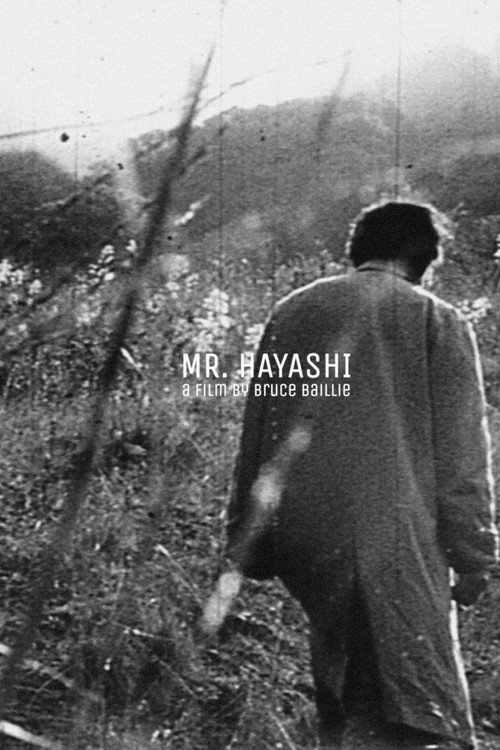
Mr. Hayashi 1963
Bruce Baillie's *Mr. Hayashi* (1963) is a mesmerizing three-minute documentary that blends quiet social commentary with striking visual poetry. Set against the misty landscapes of California's West Coast, the film introduces Mr.
Director: Bruce Baillie
Frequently Asked Questions
What is Mr. Hayashi (1963) about?
*Mr. Hayashi* (1963) follows a Japanese gardener navigating the challenges of finding decent-paying work in mid-century California. The film uses minimal dialogue to highlight themes of labor, dignity, and societal neglect, all framed by Bruce Baillie's evocative black-and-white cinematography.
Who directed Mr. Hayashi?
Mr. Hayashi was directed by Bruce Baillie, a pioneering figure in American experimental cinema known for his lyrical and socially conscious approach to filmmaking.
Who stars in Mr. Hayashi?
Actor information for *Mr. Hayashi* (1963) is not available in public records.
Is Mr. Hayashi (1963) worth watching?
While *Mr. Hayashi* (1963) is a short experimental documentary, its poetic visuals and subtle social commentary make it a compelling watch for fans of avant-garde cinema. Its brevity and artistic merit appeal to those seeking thought-provoking, atmospheric films rather than mainstream narratives.
How long is Mr. Hayashi?
Mr. Hayashi has a runtime of approximately 3 minutes.
About Mr. Hayashi (1963) — A Poetic Portrait of Work and Silence
Bruce Baillie's *Mr. Hayashi* (1963) is a mesmerizing three-minute documentary that blends quiet social commentary with striking visual poetry. Set against the misty landscapes of California's West Coast, the film introduces Mr. Hayashi, a Japanese gardener whose struggle to secure fair-paying work serves as a subtle lens into broader economic challenges. Baillie's masterful black-and-white cinematography transforms ordinary moments into something profound, as the vast, lush surroundings frame Hayashi's dignified presence in silence. The contrast between the serene beauty of nature and the weight of human labor creates an atmosphere that lingers long after the credits roll.
While the narrative is spare, *Mr. Hayashi* (1963) quietly critiques societal indifference through its protagonist's quiet resilience. Baillie's direction elevates the film beyond its documentary roots, turning it into a meditative experience that invites viewers to reflect on work, dignity, and the fleeting nature of human connection. The interplay of light and shadow, coupled with the film's unspoken emotional depth, makes it a standout entry in experimental cinema.