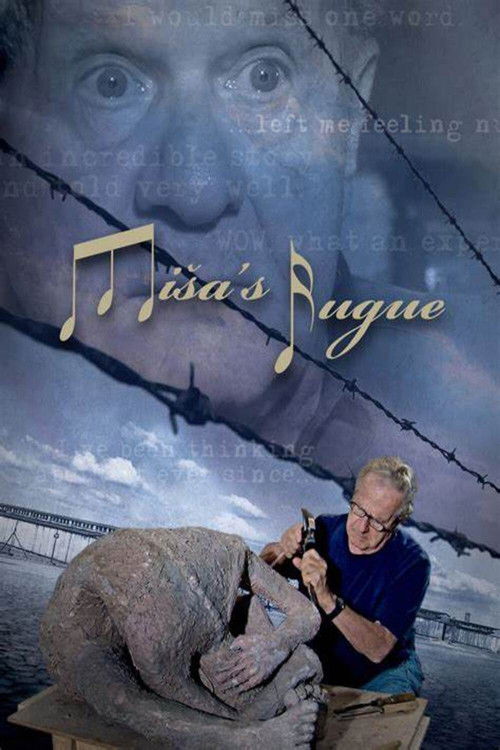
Misa's Fugue 2012
"A Boy's Journey Through the Holocaust"
In *Misa's Fugue* (2012), Sean D. Gaston crafts a deeply moving documentary that follows the harrowing true story of a young boy's survival against the unimaginable horrors of the Holocaust.
Director: Sean D. Gaston
Cast
Frequently Asked Questions
What is Misa's Fugue (2012) about?
*Misa's Fugue* (2012) tells the true story of a young boy who endured the horrors of the Holocaust by holding onto his passion for art and music. The documentary traces his experiences as a victim of Nazi oppression, highlighting how creativity became his lifeline amid unimaginable cruelty.
Who directed Misa's Fugue?
Sean D. Gaston directed *Misa's Fugue*, bringing a sensitive and immersive approach to this harrowing true story.
Who stars in Misa's Fugue?
The documentary centers on Frank Grunwald's firsthand account of his experiences, with his personal story forming the heart of the film.
Is Misa's Fugue (2012) worth watching?
With its powerful blend of historical gravity and emotional resilience, *Misa's Fugue* offers a moving perspective on survival and artistry during unimaginable times. Its documentary format and gripping narrative make it a compelling watch for fans of war history and human endurance stories.
How long is Misa's Fugue?
*Misa's Fugue* runs for 97 minutes, offering a concise yet impactful cinematic experience.
🎥 Trailer
Misa's Fugue (2012): A Boy's Journey Through Art and Atrocity — Full Movie Info
In *Misa's Fugue* (2012), Sean D. Gaston crafts a deeply moving documentary that follows the harrowing true story of a young boy's survival against the unimaginable horrors of the Holocaust. Through the lens of art and music, the film captures Misa's resilience as he navigates the darkest corners of Nazi oppression, transforming pain into a powerful testament of hope. Blending historical gravity with intimate storytelling, Gaston's direction immerses viewers in a world where creativity becomes both escape and resistance.
The documentary shines a light on the indomitable human spirit, portraying how Misa's love for music and art sustained him through genocide—a journey that feels as much like a fugue, with its shifting tones and themes, as it does a survival tale. The atmosphere is raw yet poetic, balancing emotional weight with moments of quiet resilience, making it a poignant watch for those drawn to history and human endurance.