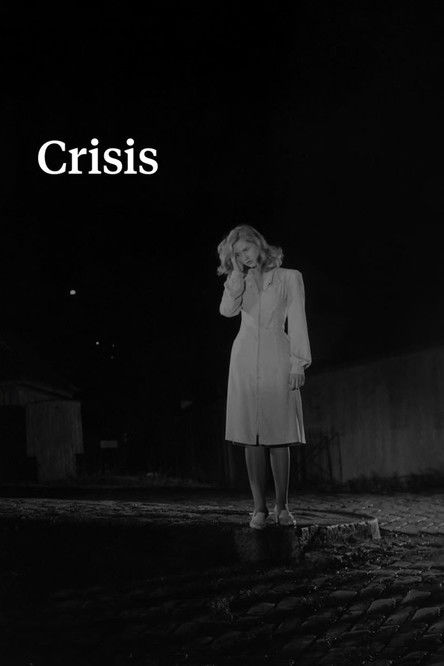
Crisis 1946
Ingmar Bergman's *Crisis (1946)* unfolds as a quietly explosive drama set in a sleepy Swedish town, where the arrival of a stranger shatters the fragile calm of a piano teacher's life.
Director: Ingmar Bergman
Cast









Frequently Asked Questions
What is Crisis (1946) about?
*Crisis (1946)* follows a small-town piano teacher whose tranquil life is upended when her foster daughter's biological mother suddenly appears, bringing along a reckless young lover. As tensions rise, the arrival exposes long-held secrets and forces the characters to confront their past choices and relationships.
Who directed Crisis?
Crisis was directed by Ingmar Bergman, the legendary Swedish filmmaker whose works explored human emotions and existential themes with unparalleled depth.
Who stars in Crisis?
The film features Inga Landgré, Stig Olin, Marianne Löfgren, Dagny Lind, and Allan Bohlin in central roles.
Is Crisis (1946) worth watching?
While *Crisis* may not boast the fame of Bergman's later masterpieces, its raw emotional intensity and exploration of human relationships make it a fascinating early entry. Fans of classic Swedish cinema and Bergman's distinctive style will likely find it rewarding, though its pacing may not suit all modern tastes.
How long is Crisis?
Crisis has a runtime of 93 minutes.
About Crisis (1946) — Ingmar Bergman's Early Drama of Love and Disruption
Ingmar Bergman's *Crisis (1946)* unfolds as a quietly explosive drama set in a sleepy Swedish town, where the arrival of a stranger shatters the fragile calm of a piano teacher's life. Played with delicate intensity by Inga Landgré, the protagonist finds her ordered world turned upside down when her foster daughter's biological mother bursts onto the scene, accompanied by a restless young lover who sows further chaos. Bergman crafts a tense, emotionally charged atmosphere, weaving themes of maternal bonds, unexpected conflicts, and the fragility of domestic peace. The film's restrained yet powerful narrative explores how love and resentment intertwine, leaving audiences to ponder the consequences of long-buried secrets.
As the story unfolds, the characters' relationships become increasingly strained, revealing the cracks in their seemingly ordinary lives. With its stark black-and-white cinematography and Bergman's signature psychological depth, *Crisis (1946)* captures the raw emotions of its era while standing apart as a compelling early work in his filmography.