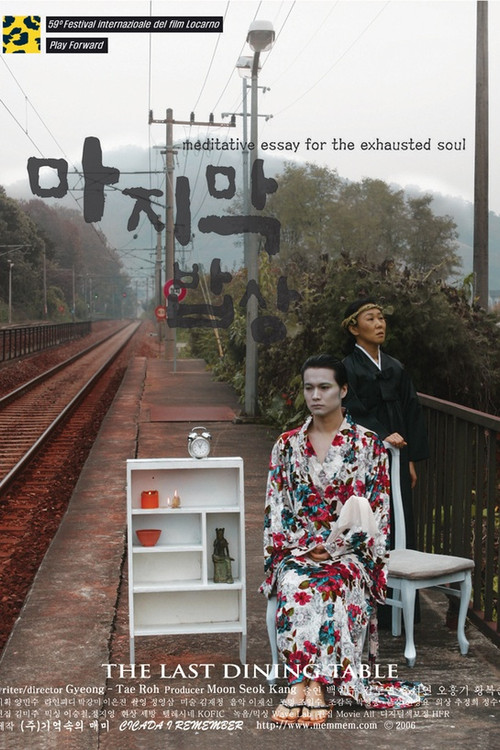
The Last Dining Table 2008
Directed by Roh Gyeong-tae, *The Last Dining Table* (2008) unfolds as a haunting exploration of irony and fragmentation in modern society.
Director: Roh Gyeong-tae
Cast


Frequently Asked Questions
What is The Last Dining Table (2008) about?
This surrealist drama examines the paradoxes of modern life, where environmental crises and crumbling family values collide. Through a series of disjointed, dreamlike scenes, the film critiques societal decay while lingering on the fading bonds between people.
Who directed The Last Dining Table?
The film was helmed by South Korean director Roh Gyeong-tae, known for his visually striking and thematically ambitious works.
Who stars in The Last Dining Table?
The cast features Baek Hyun-joo, Hong Seok-yeon, Bok-soon Hwang, Kim Do-yeon, and Oh Heung-ki in key roles.
Is The Last Dining Table (2008) worth watching?
While it lacks an IMDb rating, *The Last Dining Table* offers a unique blend of surrealism and social commentary that appeals to fans of thought-provoking Korean dramas. Its atmospheric storytelling and bold themes make it a rewarding watch for those who enjoy introspective cinema.
How long is The Last Dining Table?
Runtime details are not listed.
About The Last Dining Table (2008) — A Surreal Drama on Family and Environmental Collapse
Directed by Roh Gyeong-tae, *The Last Dining Table* (2008) unfolds as a haunting exploration of irony and fragmentation in modern society. This surrealist drama weaves together pressing social issues like environmental decay and the erosion of family bonds, all while maintaining a dreamlike, almost allegorical tone. Baek Hyun-joo, Hong Seok-yeon, and Bok-soon Hwang lead the cast, delivering performances that underscore the film's meditative yet urgent themes. Through striking visuals and an atmospheric narrative, the movie invites viewers to reflect on the contradictions of contemporary life, where progress often comes at a cost to human connection.
At its core, *The Last Dining Table* is a meditation on isolation, where shared meals become a metaphor for both intimacy and alienation. The director's bold approach challenges audiences to confront uncomfortable truths about pollution and societal decay, all wrapped in a narrative that blurs the line between reality and surrealism. With its thought-provoking themes and evocative storytelling, this Korean drama stands out as a poignant commentary on the fragility of modern existence.