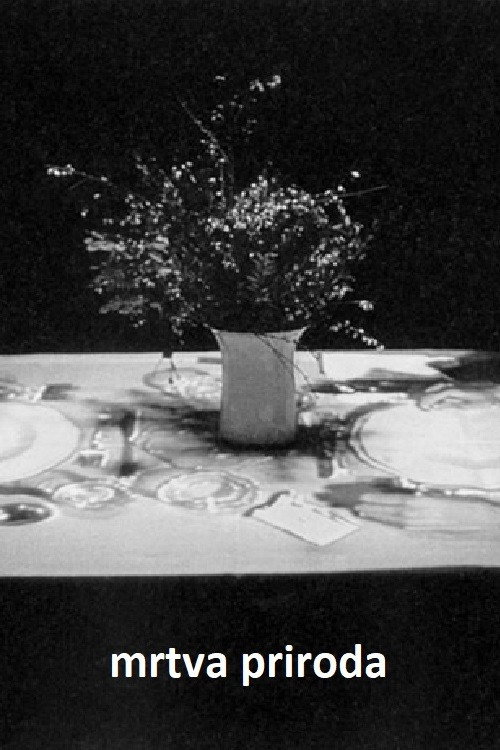
Still Life 1974
Still Life (1974) is a groundbreaking experimental short documentary by visionary artist Dalibor Martinis that reimagines the humble television set as a living still life canvas.
Director: Dalibor Martinis
Frequently Asked Questions
What is Still Life (1974) about?
Dalibor Martinis' Still Life (1974) explores the television set as an artistic medium, turning news broadcasts into a mesmerizing yet critical commentary on media saturation. The film dissects the cyclical nature of information consumption, framing it as a visual still life where repetition becomes both the subject and the structure.
Who directed Still Life?
Still Life (1974) was directed by Dalibor Martinis, a pioneering figure in video and experimental art whose work often blurs the lines between technology and creativity.
Who stars in Still Life?
Cast details for Still Life (1974) are not listed, as the film is a conceptual art piece focused on the medium rather than performers.
Is Still Life (1974) worth watching?
While Still Life (1974) may not appeal to mainstream audiences, it's a fascinating artifact for fans of experimental film and video art. Its brevity and bold concept make it a quick but thought-provoking watch for those interested in the history of multimedia art.
How long is Still Life?
Still Life (1974) has a runtime of 20 minutes.
Still Life (1974): A Groundbreaking Video Art Experiment — Full Movie Info
Still Life (1974) is a groundbreaking experimental short documentary by visionary artist Dalibor Martinis that reimagines the humble television set as a living still life canvas. Through the lens of early video art, Martinis transforms the flickering glow of television news into a hypnotic meditation on repetition and futility, dubbing it a 'circulus vitiosus'—a self-perpetuating cycle of information overload. The film's minimalist aesthetic and unconventional approach invite viewers to question the boundaries between art, media, and perception, creating an immersive experience that lingers long after the screen fades to black. Set against the backdrop of 1970s avant-garde experimentation, Still Life (1974) remains a cult favorite for those drawn to the intersection of technology and artistic expression.
With its concise 20-minute runtime, Martinis' work is a masterclass in visual storytelling, stripping away conventional narrative to focus on the raw power of the moving image. The film's themes of stagnation and cyclical consumption resonate as strongly today as they did over five decades ago, making it a pivotal piece in the evolution of video art. Whether you're a cinephile, an art historian, or simply curious about the origins of multimedia experimentation, Still Life (1974) offers a unique glimpse into the mind of one of experimental film's most innovative pioneers.