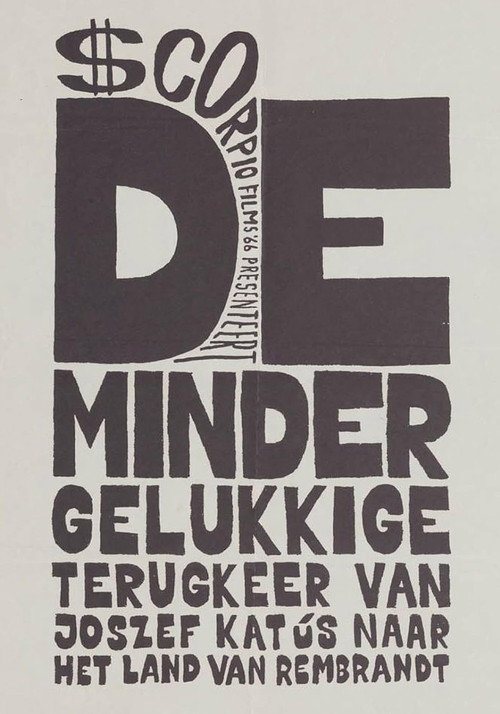
Joszef Katús's Not Too Fortunate Return to the Land of Rembrandt 1966
Joszef Katús's Not Too Fortunate Return to the Land of Rembrandt (1966) captures a fleeting moment in Amsterdam's history, as Dutch counterculture collides with tradition during the early days of the Provos movement.
Director: Wim Verstappen
Cast



Frequently Asked Questions
What is Joszef Katús's Not Too Fortunate Return to the Land of Rembrandt (1966) about?
This experimental documentary-drama follows Joszef Katús, a Hungarian émigré, as he returns to Amsterdam in 1966 amid the rise of the Provos movement. Through his wandering perspective, the film captures the city's social and political pulse during four key national celebrations.
Who directed Joszef Katús's Not Too Fortunate Return to the Land of Rembrandt?
Wim Verstappen directed this atmospheric exploration of Amsterdam in 1966, blending documentary realism with intimate character study.
Who stars in Joszef Katús's Not Too Fortunate Return to the Land of Rembrandt?
The film features Rudolf Lucieer as Joszef Katús, alongside Barbara Meter, Etha Coster, Nouchka van Brakel, and Roelof Kiers in key roles.
Is Joszef Katús's Not Too Fortunate Return to the Land of Rembrandt (1966) worth watching?
While not a mainstream narrative, Verstappen's film offers a fascinating time capsule of 1960s Amsterdam, blending counterculture energy with quiet introspection. Its experimental style may appeal to fans of historical documentaries or European art cinema.
How long is Joszef Katús's Not Too Fortunate Return to the Land of Rembrandt?
The film runs for 94 minutes, offering a concise yet immersive viewing experience.
About Joszef Katús's Not Too Fortunate Return to the Land of Rembrandt (1966) — A Dutch counterculture documentary with a wandering outsider's view
Joszef Katús's Not Too Fortunate Return to the Land of Rembrandt (1966) captures a fleeting moment in Amsterdam's history, as Dutch counterculture collides with tradition during the early days of the Provos movement. Directed by Wim Verstappen, this atmospheric documentary-drama follows Joszef Katús, a Hungarian émigré returning to the city after months away, as he wanders its streets in 1966. The film unfolds against the backdrop of four pivotal national celebrations—Queen's Birthday, Labour Day, Liberation Day, and Remembrance Day—painting a vivid portrait of societal tension and cultural change. Verstappen's loose, observational style immerses viewers in a city on the brink of transformation, where every corner hums with the energy of rebellion and reflection.
The journey is less about plot and more about atmosphere, blending real-life events with Katús's wandering perspective to create a quietly powerful snapshot of a bygone era. With its stark black-and-white cinematography and unflinching gaze, the film invites audiences to feel the pulse of Amsterdam, not as a tourist, but as an outsider grappling with belonging and displacement.