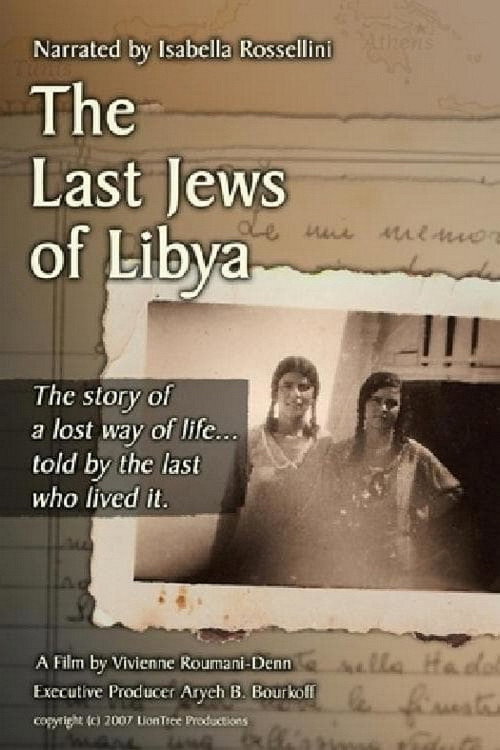
The Last Jews of Libya 2007
This poignant documentary, *The Last Jews of Libya* (2007), directed by Vivienne Roumani and narrated by Isabella Rossellini, delves into the vanished world of Libya's Sephardic Jewish community before the turbulent years of World War II.
Director: Vivienne Roumani
Cast

Frequently Asked Questions
What is The Last Jews of Libya (2007) about?
This documentary explores the rich history of Libya's Sephardic Jewish community before World War II, tracing their cultural legacy and the circumstances that led to its decline. Through personal stories and historical context, the film preserves the memories of a vibrant community now largely forgotten.
Who directed The Last Jews of Libya?
Vivienne Roumani directed *The Last Jews of Libya*, bringing a thoughtful and evocative approach to this historical narrative.
Who stars in The Last Jews of Libya?
The documentary features the narration of Isabella Rossellini, whose voice adds a compelling and emotional depth to the storytelling.
Is The Last Jews of Libya (2007) worth watching?
*The Last Jews of Libya* is a compelling watch, especially for those interested in Jewish history or documentaries that blend personal memory with broader historical events. Its concise 50-minute runtime makes it accessible, though its emotional weight lingers much longer.
How long is The Last Jews of Libya?
The runtime of *The Last Jews of Libya* is 50 minutes.
About The Last Jews of Libya (2007) — A documentary ode to Libya's vanished Sephardic Jewish culture
This poignant documentary, *The Last Jews of Libya* (2007), directed by Vivienne Roumani and narrated by Isabella Rossellini, delves into the vanished world of Libya's Sephardic Jewish community before the turbulent years of World War II. Through archival footage and personal recollections, the film paints a vivid portrait of a flourishing culture—rich in traditions, languages, and stories—that once thrived in the North African landscape. Roumani's sensitive approach transforms historical records into a deeply human narrative, evoking both nostalgia and reflection on the fragility of cultural heritage.
Set against the backdrop of colonial Libya and the shifting sands of history, the documentary captures the warmth of a community bound by faith and shared experiences. Rossellini's narration lends an intimate, almost poetic quality to the storytelling, guiding viewers through a journey that feels both personal and universal. The film doesn't just document the past; it serves as a elegy for a way of life erased by time and conflict, leaving audiences with a sense of both loss and enduring curiosity.