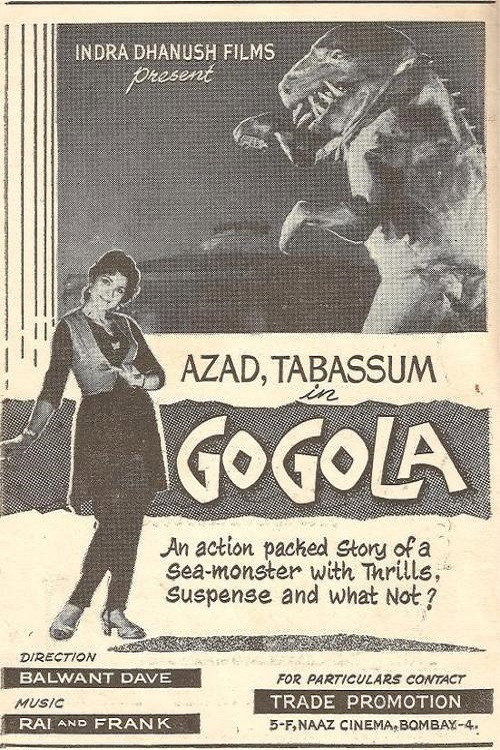
Gogola 1966
"An action packed story of a sea-monster with thrills, suspense and what not?"
Gogola (1966) is a Bollywood science fiction horror film that captures the essence of a bygone era. Directed by Balwant Dave, this cult classic tells the story of a sea monster, drawing inspiration from the iconic Gojira.
Director: Balwant Dave
Frequently Asked Questions
What is Gogola (1966) about?
Gogola tells the story of a sea monster, drawing inspiration from the iconic Gojira. The film is a unique blend of thrills, suspense, and action that's sure to captivate audiences.
Who directed Gogola?
Gogola was directed by Balwant Dave.
Who stars in Gogola?
Unfortunately, the main cast of Gogola is not well-documented.
Is Gogola (1966) worth watching?
While Gogola may not have the highest IMDb rating, its unique blend of science fiction and horror makes it a must-watch for fans of the genre. With its eerie atmosphere and captivating visuals, Gogola is sure to leave you on the edge of your seat.
How long is Gogola?
Gogola has a runtime of 133 minutes.
About Gogola (1966) — A Forgotten Bollywood Classic
Gogola (1966) is a Bollywood science fiction horror film that captures the essence of a bygone era. Directed by Balwant Dave, this cult classic tells the story of a sea monster, drawing inspiration from the iconic Gojira. With its unique blend of thrills, suspense, and action, Gogola offers a thrilling ride that's hard to put down. From the eerie atmosphere to the genre-defying themes, this 1966 film is a must-watch for fans of science fiction and horror. Whether you're a seasoned cinephile or just looking for a new adventure, Gogola is sure to leave you on the edge of your seat.
The film's runtime of 133 minutes makes it a substantial watch, but the engaging storyline and captivating visuals make every moment worthwhile. Balwant Dave's direction brings the sea monster to life in a way that's both terrifying and awe-inspiring. With its unique blend of science fiction and horror, Gogola is a true original that's sure to captivate audiences.