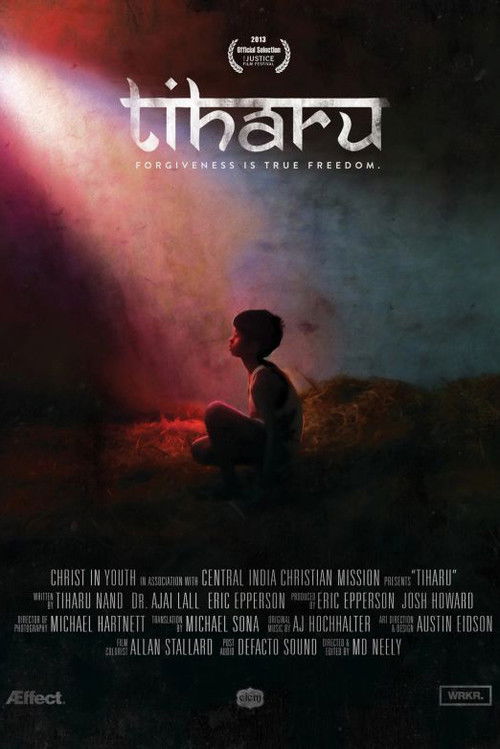
Tiharu 2013
"Forgiveness Is True Freedom."
Tiharu (2013), a poignant documentary by M.D. Neely, sheds light on the harsh realities faced by families in India's central villages, where extreme poverty forces devastating choices.
Director: M.D. Neely
Frequently Asked Questions
What is Tiharu (2013) about?
Tiharu (2013) follows families in India's poorest villages, where extreme poverty forces parents to make unimaginable choices—selling their children into slavery or watching them starve. The documentary, directed by M.D. Neely, exposes the cycle of despair and resilience in these communities, framed by the powerful idea that forgiveness is true freedom.
Who directed Tiharu?
Tiharu was directed by M.D. Neely, a filmmaker known for tackling socially relevant themes with raw honesty.
Who stars in Tiharu?
Cast details for Tiharu (2013) are not listed.
Is Tiharu (2013) worth watching?
While Tiharu (2013) is a short documentary, its powerful storytelling and emotional weight make it worth watching for those interested in social issues. The film's unflinching look at poverty and sacrifice offers a perspective that lingers long after the credits roll.
How long is Tiharu?
Tiharu (2013) has a runtime of 22 minutes.
Tiharu: A 22-Minute Documentary on Poverty and Sacrifice — Full Movie Info
Tiharu (2013), a poignant documentary by M.D. Neely, sheds light on the harsh realities faced by families in India's central villages, where extreme poverty forces devastating choices. Directed with sensitivity, this 22-minute film explores the moral dilemmas of parents compelled to sell their children into slavery as a grim alternative to starvation. Through stark storytelling, it captures the raw emotions and societal pressures that shape these impossible decisions, immersing viewers in an atmosphere of desperation and resilience.
The documentary's title, meaning 'forgiveness,' underscores its central theme, highlighting how forgiveness can be a path to freedom for both victims and perpetrators. Tiharu (2013) is more than a film—it's a call to confront uncomfortable truths, blending cultural insight with human drama to spark reflection on justice and survival.