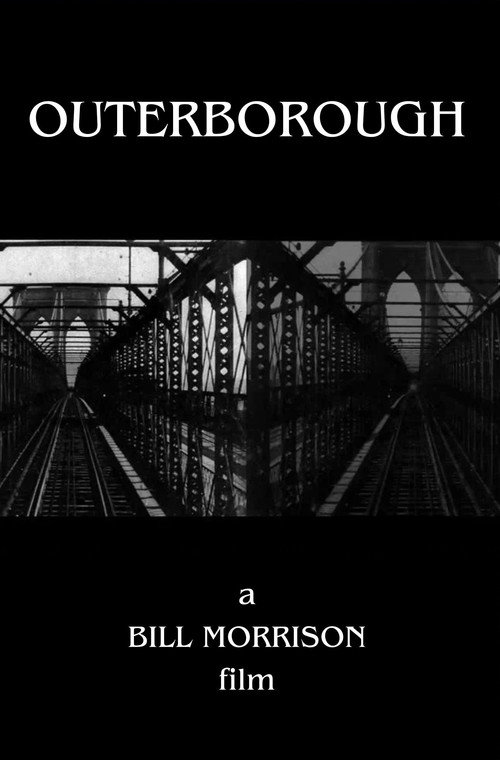
Outerborough 2005
Outerborough (2005) is an avant-garde documentary that breathes new life into a lost piece of early cinema history. Bill Morrison transforms a century-old trolley ride across the Brooklyn Bridge, filmed in 1899 by an unknown photographer, into a mesmerizing visual experiment.
Director: Bill Morrison
Frequently Asked Questions
What is Outerborough (2005) about?
Outerborough (2005) revisits a 19th-century film project capturing a trolley ride across the Brooklyn Bridge. Bill Morrison reconstructs the original footage, shot in 1899, into a split-screen visual experiment that explores history, memory, and the passage of time.
Who directed Outerborough?
Outerborough was directed by Bill Morrison, a renowned American avant-garde filmmaker known for his innovative work with archival footage and experimental techniques.
Who stars in Outerborough?
Outerborough is a documentary with no traditional cast. The film features the original 1899 footage and Morrison's creative reconstruction of it.
Is Outerborough (2005) worth watching?
Outerborough (2005) is a short but compelling watch for fans of experimental cinema and early film history. While it's an unrated documentary, its unique approach to archival material makes it a standout piece for cinephiles interested in innovation and historical reinterpretation.
How long is Outerborough?
The runtime of Outerborough is approximately 9 minutes.
About Outerborough (2005) — A hypnotic reimagining of early cinema's lost journey
Outerborough (2005) is an avant-garde documentary that breathes new life into a lost piece of early cinema history. Bill Morrison transforms a century-old trolley ride across the Brooklyn Bridge, filmed in 1899 by an unknown photographer, into a mesmerizing visual experiment. By splitting and recombining the original 90-foot film rolls, he creates a fragmented, hypnotic journey that blurs the line between past and present. The 9-minute short piece captures the raw energy of New York's early urban landscape while reflecting on the fragility of film itself. Morrison's work invites viewers to ponder how history can be rediscovered and reinterpreted through modern artistic vision.
This experimental homage from the Museum of Modern Art's reopening isn't just a technical marvel—it's a meditation on time, perception, and the ephemeral nature of visual media. The split-screen technique invites comparisons to early cinema's pioneering spirit while evoking a sense of nostalgia for a city that has evolved beyond recognition. Outerborough (2005) is a quiet yet powerful testament to how a single artifact can inspire endless creativity.