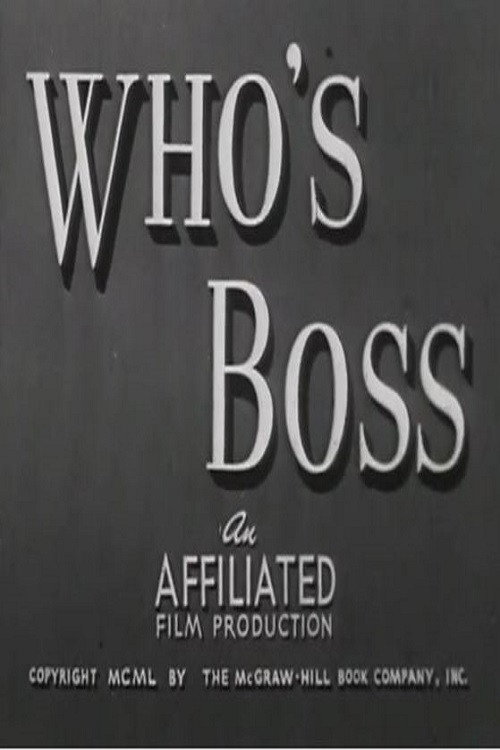
Who's Boss? 1950
Step into the intimate kitchen-sink drama *Who's Boss? (1950)*, a striking neorealist social guidance short that strips marriage down to its raw power struggles.
Director: Alexander Hammid
Frequently Asked Questions
What is *Who's Boss? (1950)* about?
This neorealist short peels back the veneer of a 1950s marriage, exposing the unspoken power struggles between a husband and wife. Through sharp dialogue and stark visuals, it asks who holds the reins in a relationship when tradition and desire collide.
Who directed *Who's Boss? (1950)*?
The film was directed by Alexander Hammid, a pioneer of avant-garde and documentary-style cinema known for his innovative visual storytelling.
Who stars in *Who's Boss? (1950)*?
Cast details for *Who's Boss? (1950)* are not listed in public records.
Is *Who's Boss? (1950)* worth watching?
While it's a short film, its neorealist approach and themes of marital power dynamics give it niche appeal. It's best for fans of early social guidance films or those curious about mid-century domestic struggles—though its brevity and lack of IMDb rating may limit broader interest.
How long is *Who's Boss? (1950)*?
The runtime is 16 minutes.
About Who's Boss? (1950) — A Neorealist Glimpse Into Marriage's Power Struggles
Step into the intimate kitchen-sink drama *Who's Boss? (1950)*, a striking neorealist social guidance short that strips marriage down to its raw power struggles. Directed by Alexander Hammid, this 16-minute black-and-white portrait follows a husband and wife locked in a quiet yet fierce battle over who truly wears the trousers. Shot in a documentary-like style, the film lingers on tense glances and clipped exchanges, turning everyday domestic friction into a microcosm of societal expectations. The mood is tense yet understated, with every mundane decision—a dropped dish, a delayed reply—feeling like a loaded move in a high-stakes chess game.
Though modest in length, *Who's Boss? (1950)* delivers outsized emotional weight, exploring themes of equality, compromise, and the quiet revolutions that shape relationships. Its neorealist approach immerses viewers in the couple's world, making their struggles feel immediate and deeply human. For fans of gritty character studies and early social cinema, this short film offers a compelling glimpse into mid-century domestic dynamics—compact, candid, and quietly unforgettable.