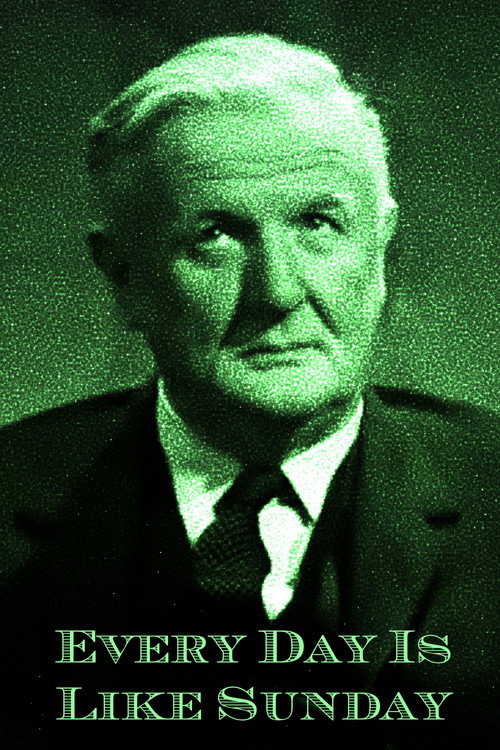
Every Day Is Like Sunday 2011
In *Every Day Is Like Sunday* (2011), filmmaker Adam Curtis uncovers the dramatic and largely forgotten saga of Cecil King, a once-dominant newspaper magnate whose empire crumbled long before the media scandals of today.
Director: Adam Curtis
Cast

Frequently Asked Questions
What is *Every Day Is Like Sunday* (2011) about?
This documentary explores the dramatic rise and fall of Cecil King, a powerful British newspaper mogul in the 1960s. His empire unraveled under a mix of hubris and scandal, long before Rupert Murdoch's era. The film draws unsettling parallels between King's story and modern media crises.
Who directed *Every Day Is Like Sunday*?
The film was directed by Adam Curtis, the acclaimed British filmmaker known for his deep-dive documentaries on power, politics, and societal shifts.
Who stars in *Every Day Is Like Sunday*?
The documentary features Cecil King as its central figure, though the cast primarily consists of archival footage and historical analysis.
Is *Every Day Is Like Sunday* (2011) worth watching?
With its razor-sharp insights into media power and a runtime that's tight but impactful, this documentary is a must-watch for fans of political history. Curtis's storytelling keeps it engaging, though its niche subject may not appeal to all. Still, the themes remain strikingly relevant today.
How long is *Every Day Is Like Sunday*?
The runtime is 44 minutes, making it a concise yet dense exploration of its subject.
Every Day Is Like Sunday (2011): The Untold Media Mogul Downfall — Full Info
In *Every Day Is Like Sunday* (2011), filmmaker Adam Curtis uncovers the dramatic and largely forgotten saga of Cecil King, a once-dominant newspaper magnate whose empire crumbled long before the media scandals of today. This documentary weaves historical insights with Curtis's signature narrative style, painting a portrait of power, ambition, and inevitable decline in the British media landscape. As the shadow of Rupert Murdoch's own empire loomed large, the film draws eerie parallels between past and present, revealing how media moguls shape—and sometimes destroy—democracy. The atmosphere is one of stark revelation, blending archival footage with Curtis's sharp commentary to expose the fragile nature of control.
This 44-minute documentary isn't just a history lesson; it's a cautionary tale about the unchecked influence of the press. By revisiting King's downfall, Curtis invites viewers to reflect on the cyclical nature of power and the ethical dilemmas that arise when media barons wield unchecked authority. The film's tone is both urgent and reflective, making it a compelling watch for anyone intrigued by the intersection of journalism, politics, and power.