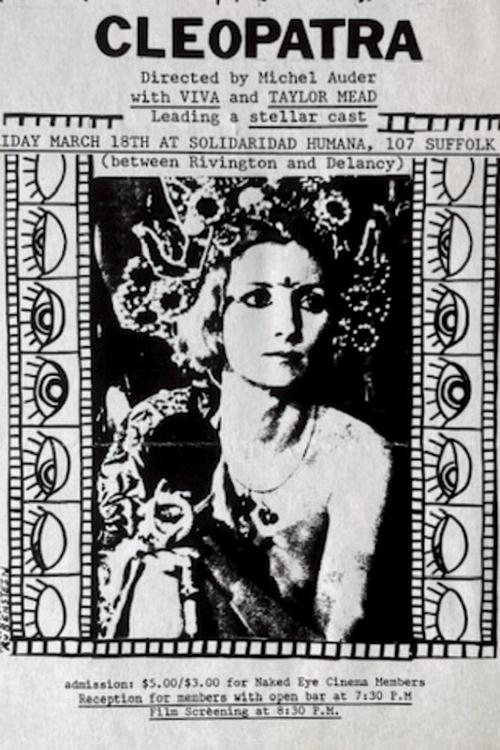
Cleopatra 1970
Michel Auder's *Cleopatra (1970)* isn't your typical historical epic—it's a bold, experimental documentary that reimagines the grandeur of Hollywood's most infamous historical drama through the lens of Warhol's avant-garde circle.
Director: Michel Auder
Cast






Frequently Asked Questions
What is Cleopatra (1970) about?
*Cleopatra (1970)* is a radical, documentary-style reinterpretation of the 1963 Hollywood epic, shot through the prism of Andy Warhol's Factory scene. The film follows a cast of underground icons as they improvise their way through Cleopatra's myth, blending satire, nostalgia, and raw performance art.
Who directed Cleopatra?
Michel Auder directed *Cleopatra (1970)*, crafting a unique hybrid of documentary and improvisational filmmaking.
Who stars in Cleopatra?
The film features a star-studded lineup from Warhol's Factory, including Viva, Gerard Malanga, Taylor Mead, Nico, Ondine, and Marco St. John.
Is Cleopatra (1970) worth watching?
If you're a fan of avant-garde cinema or Warhol's legacy, *Cleopatra (1970)* offers a fascinating, if niche, experience. Its experimental approach won't appeal to everyone, but it's a bold relic of its time—a visually striking and thematically rich oddity that challenges traditional storytelling.
How long is Cleopatra?
The film runs for 155 minutes, offering an immersive dive into its audacious reinterpretation of history.
About Cleopatra (1970) — Warhol's Factory Reimagines Hollywood's Most Infamous Epic
Michel Auder's *Cleopatra (1970)* isn't your typical historical epic—it's a bold, experimental documentary that reimagines the grandeur of Hollywood's most infamous historical drama through the lens of Warhol's avant-garde circle. Drawing inspiration from Joseph Mankiewicz's 1963 blockbuster starring Elizabeth Taylor and Richard Burton, Auder's cast—drawn from Andy Warhol's Factory ensemble—embarks on a scene-by-scene improvisational journey, dissecting the myths of power, romance, and spectacle that surround Cleopatra's legend. With a raw, unfiltered aesthetic, the film blurs the line between fiction and reality, transforming a legendary tale into a meta-cinematic experiment that feels both nostalgic and subversively modern.
The atmosphere is electric, blending the decadence of 1960s counterculture with the opulence of ancient Egypt. Viva, Gerard Malanga, Nico, and other iconic figures from Warhol's orbit infuse the narrative with their signature charisma, turning historical drama into a living, breathing exploration of fame and mythmaking. *Cleopatra (1970)* is less about recounting history and more about deconstructing how cinema shapes our perception of it—making it a must-see for fans of experimental film and 20th-century pop art.