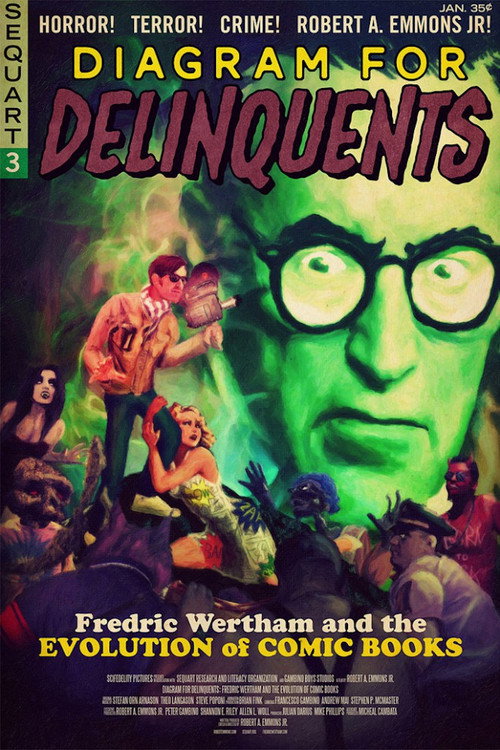
Diagram for Delinquents 2014
Step back to the mid-1950s when America saw comic books as a public menace, a dangerous spark for juvenile delinquency. Director Robert A. Emmons Jr.
Director: Robert A. Emmons Jr.
Cast




Frequently Asked Questions
What is Diagram for Delinquents (2014) about?
This 2014 documentary dives into the 1950s moral panic over comic books, focusing on psychiatrist Dr. Fredric Wertham's controversial book *Seduction of the Innocent* and the Senate hearings that followed. The film explores how fears over juvenile delinquency nearly led to federal censorship of an entire industry.
Who directed Diagram for Delinquents?
Robert A. Emmons Jr. directed *Diagram for Delinquents*, weaving archival footage with interviews to unpack a pivotal moment in pop culture history.
Who stars in Diagram for Delinquents?
The documentary features comic book legends Brian Azzarelli, Matt Fraction, Paul Levitz, Roy Thomas, and Al Feldstein alongside pivotal figures from the era.
Is Diagram for Delinquents (2014) worth watching?
As a raw look at media censorship and moral panics, *Diagram for Delinquents* isn't just for comic fans—it's a sharp study of how fear can reshape culture. Its 133-minute runtime rewards viewers seeking depth and historical context, blending nostalgia with urgent relevance.
How long is Diagram for Delinquents?
The documentary runs for 133 minutes.
🎥 Trailer
About Diagram for Delinquents (2014) — How a 1954 Senate hearing nearly buried comic books forever
Step back to the mid-1950s when America saw comic books as a public menace, a dangerous spark for juvenile delinquency. Director Robert A. Emmons Jr.'s *Diagram for Delinquents (2014)* peels back the moral panic that gripped the nation, grounding it in the explosive testimony of psychiatrist Dr. Fredric Wertham and the explosive hearings that followed. Through interviews with comic legends like Brian Azzarelli, Matt Fraction, and industry titans Paul Levitz and Roy Thomas, the documentary reconstructs a time when Superman and Batman were on trial in the court of public opinion. The mood is equal parts archival suspense and nostalgic dread, as the film charts how a single book—Seduction of the Innocent—reshaped an entire art form and stoked fears that still echo in debates about media's influence on young minds.
This isn't just a history lesson; it's a reflection on the cyclical nature of blame, where art forms become scapegoats for societal anxieties. *Diagram for Delinquents* balances sharp insights from comic creators with the chilling gravity of the Senate hearings, offering a lens into the fragile relationship between creators, critics, and the culture they shape.