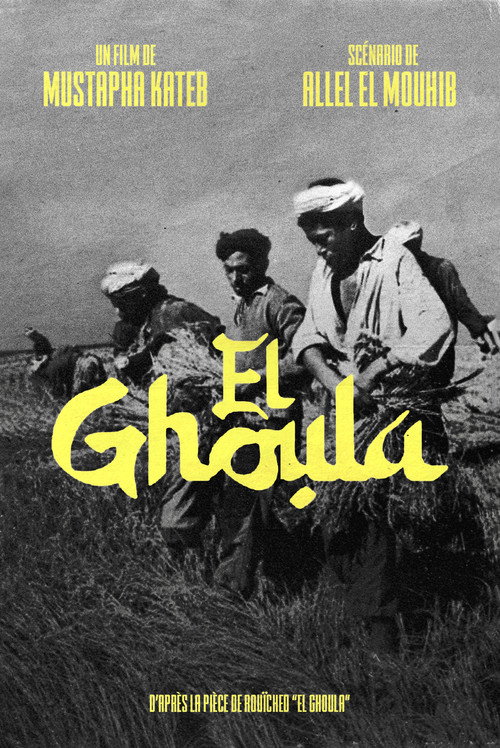
El Ghoula 1972
Set in the heart of post-independence Algeria, El Ghoula (1972) dives into the unnerving gap between revolutionary ideals and ground realities.
Director: Mustapha Kateb
Cast

Frequently Asked Questions
What is El Ghoula (1972) about?
El Ghoula (1972) follows a corrupt official who exploits an agricultural cooperative by hiding behind revolutionary slogans. Instead of helping the peasants, he turns their labor into bureaucratic chaos for personal gain, exposing the hypocrisy of those in power.
Who directed El Ghoula?
Mustapha Kateb directed El Ghoula, bringing a sharp directorial eye to Rouïched's biting satire.
Who stars in El Ghoula?
The film features Rouïched in the lead role, supported by Larbi Zekkal, Allel El Mouhib, and Latifa Kazdarli in pivotal supporting parts.
Is El Ghoula (1972) worth watching?
Though unrated on IMDb, its sharp satire and historical relevance make it a compelling watch for fans of drama-comedy with social depth. The film's themes of corruption and resilience resonate strongly, offering both entertainment and food for thought.
How long is El Ghoula?
Runtime details are not listed.
About El Ghoula (1972) — A Satirical Take on Power and Corruption in Post-Colonial Algeria
Set in the heart of post-independence Algeria, El Ghoula (1972) dives into the unnerving gap between revolutionary ideals and ground realities. Directed by Mustapha Kateb and adapted from comedian Rouïched's sharp satire, this drama-comedy follows a self-serving official who hollows out the spirit of an agricultural cooperative. Cloaked in patriotic slogans and empty rhetoric, he turns collective labor into a grotesque maze of paperwork, siphoning resources and dignity alike.
With its biting humor and stark social commentary, the film captures the absurdity of bureaucratic corruption in a young nation. Rouïched stars alongside Larbi Zekkal and Latifa Kazdarli, delivering performances that balance dark satire with human vulnerability. The atmosphere is tense yet playful, blending dry wit with underlying urgency—a reminder that the real 'vampire' may not be a monster, but a man in a suit.