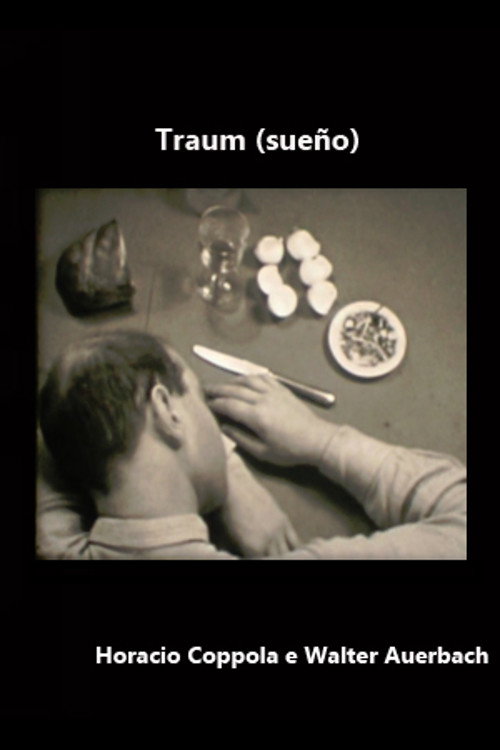
Dream 1933
Horacio Coppola's Dream (1933) is a mesmerizing experiment in surreal cinema, born from his travels through Europe and his encounters with avant-garde artists.
Director: Horacio Coppola
Frequently Asked Questions
What is Dream (1933) about?
Dream (1933) is a surrealist drama that explores the dreamlike quality of reality, blurring the lines between what is real and what is imagined.
Who directed Dream?
Horacio Coppola directed Dream (1933), drawing on his experiences as a traveler and his encounters with avant-garde artists.
Who stars in Dream?
Unfortunately, the cast information for Dream (1933) is not available.
Is Dream (1933) worth watching?
As a short drama that defies easy categorization, Dream (1933) is a must-see for anyone interested in the history of cinema and the art of the avant-garde. With its innovative style and its willingness to push the boundaries of conventional storytelling, this film is sure to captivate and inspire viewers.
How long is Dream?
Dream (1933) has a runtime of 2 minutes.
About Dream (1933) — A Surreal Experiment in Cinema — Full Movie Info
Horacio Coppola's Dream (1933) is a mesmerizing experiment in surreal cinema, born from his travels through Europe and his encounters with avant-garde artists. This short drama, shot in Berlin, is an intriguing fusion of French and German influences, reflecting the secessionist art movement that was thriving in cities like Vienna, Budapest, and Prague. The film's concise 2-minute runtime belies its depth and complexity, inviting viewers to immerse themselves in its dreamlike atmosphere. Coppola's vision is both a reflection of his own artistic journey and a testament to the innovative spirit of the 1920s and 1930s. As we delve into the world of Dream (1933), we find ourselves in the midst of a cinematic movement that continues to inspire and intrigue audiences today.
The dreamlike quality of Coppola's film is perfectly captured in its title, evoking the idea of a world that is both familiar and yet utterly strange. With its blend of drama and thriller elements, Dream (1933) is a film that defies easy categorization, instead opting for a more nuanced and open-ended approach. As we watch Coppola's vision unfold, we are drawn into a world of surreal beauty and haunting atmosphere, one that continues to captivate and inspire viewers to this day.
Dream (1933) may be a short film, but its impact is anything but fleeting. With its innovative style and its willingness to push the boundaries of conventional storytelling, this film is a must-see for anyone interested in the history of cinema and the art of the avant-garde.