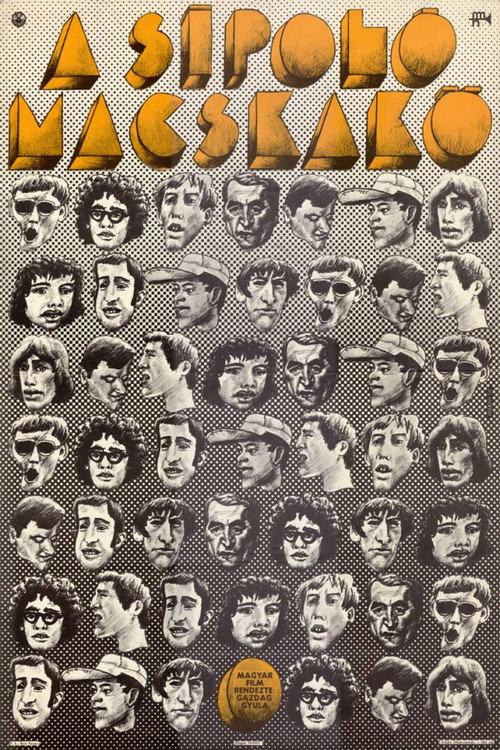
The Whistling Cobblestone 1971
Gyula Gazdag's *The Whistling Cobblestone (1971)* is a sharp, documentarian satire that peels back the layers of a dysfunctional youth camp, where idealistic high-schoolers are handed working tools but no actual work.
Director: Gyula Gazdag
Cast

Frequently Asked Questions
What is The Whistling Cobblestone (1971) about?
This 1971 Hungarian satire follows a group of high-school students at a youth camp where poor organization leaves them with tools but no actual work to complete. As the camp leadership scrambles to maintain appearances, the students confront the absurdity of their situation, leading to a wry exploration of authority and disillusionment.
Who directed The Whistling Cobblestone?
The film was directed by Gyula Gazdag, a Hungarian filmmaker known for his sharp social critiques and documentarian style.
Who stars in The Whistling Cobblestone?
The main cast includes János Bozsogi, Gábor Gergely, Balázs Györe, János Xantus, and Zoltán Paulinyi.
Is The Whistling Cobblestone (1971) worth watching?
While not widely rated on IMDb, *The Whistling Cobblestone* offers a unique blend of dark comedy and social commentary that resonates with fans of Eastern European cinema. Its dry humor and authentic portrayal of youth disillusionment make it a hidden gem for those who appreciate thought-provoking, offbeat films.
How long is The Whistling Cobblestone?
The film runs for 105 minutes.
The Whistling Cobblestone (1971): A Satirical Look at Youth and Bureaucracy — Full Movie Info
Gyula Gazdag's *The Whistling Cobblestone (1971)* is a sharp, documentarian satire that peels back the layers of a dysfunctional youth camp, where idealistic high-schoolers are handed working tools but no actual work. Set against the backdrop of a misguided attempt to nurture "community life," the film contrasts the students' reality with the camp leadership's futile efforts to mask the chaos. The atmosphere is a mix of dry humor and biting social commentary, exposing the absurdities of bureaucratic mismanagement and the disillusionment of young minds caught in the gears of a broken system. With its deadpan tone and keen observations, the movie explores themes of authority, resilience, and the gap between rhetoric and reality, all while maintaining a distinctly Hungarian lens on post-war generational struggles.
The camp's name itself becomes a metaphor for the hollow promises peddled to the teens, whose enthusiasm is gradually replaced by skepticism. *The Whistling Cobblestone* isn't just a comedy—it's a quiet rebellion against the stifling conformity of institutional control, wrapped in the relatable struggles of adolescence. The film's documentary-style approach lends it an authenticity that elevates it beyond mere farce, making it a fascinating time capsule of 1970s Eastern European youth culture.