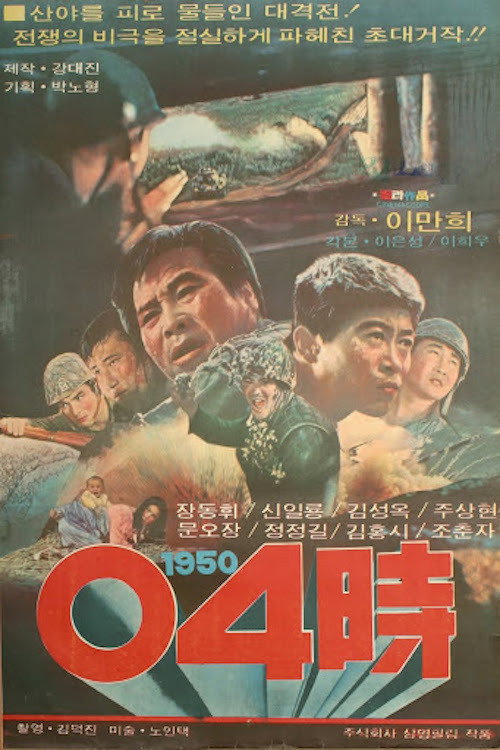
4 O'Clock, 1950 1972
South Korea's fragile peace shatters in an instant when the Korean War erupts on June 25, 1950, exposing deep unpreparedness and plunging the nation into chaos.
Director: Lee Man-hee
Frequently Asked Questions
What is 4 O'Clock, 1950 (1972) about?
The film vividly portrays the chaotic first hours of the Korean War, focusing on the unprepared South Korean society as it faces sudden invasion. It captures the confusion, fear, and urgency of June 25, 1950, when normal life was violently interrupted at dawn.
Who directed 4 O'Clock, 1950?
4 O'Clock, 1950 was directed by Lee Man-hee, a prominent South Korean filmmaker known for his powerful dramas and social commentary.
Who stars in 4 O'Clock, 1950?
Cast details for 4 O'Clock, 1950 are not listed, so specific performers remain unknown.
Is 4 O'Clock, 1950 (1972) worth watching?
As a dramatic retelling of a pivotal historical moment, 4 O'Clock, 1950 offers compelling storytelling for fans of war films and historical dramas. While not widely rated, its thematic depth and Lee Man-hee's direction make it a notable Korean War entry worth exploring.
How long is 4 O'Clock, 1950?
4 O'Clock, 1950 has a runtime of 92 minutes.
About 4 O'Clock, 1950 (1972) — The Korean War's First Hours on Screen
South Korea's fragile peace shatters in an instant when the Korean War erupts on June 25, 1950, exposing deep unpreparedness and plunging the nation into chaos. This gripping 1972 drama by Lee Man-hee plunges viewers into the raw urgency of the first hours, when the sound of approaching artillery marked the collapse of stability. Through stark visuals and tense pacing, the film captures the shock and disorientation of a society caught off-guard, blending historical gravity with personal urgency. As dawn breaks and the nation scrambles to respond, "4 O'Clock, 1950" becomes a haunting meditation on vulnerability, resilience, and the sudden fragility of peace.
Set against the backdrop of a divided peninsula, the movie immerses audiences in a world where time stands still at 4:00 AM—an hour that changed everything. Its dramatic intensity and historical weight make it a compelling watch for fans of war cinema and period dramas alike, offering a rare Korean perspective on a pivotal moment in modern history.