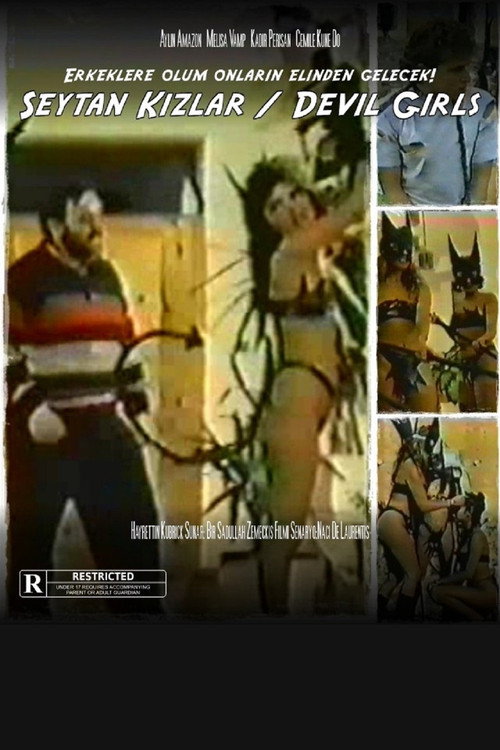
Devil Girls 1987
In the 1987 Turkish action thriller *Devil Girls*, a group of women, pushed to the brink by relentless harassment and societal oppression, hatch a radical plan: to wipe out the male population and seize control of the world.
Director: Kadir Akgün
Cast
Frequently Asked Questions
What is Devil Girls (1987) about?
The film follows a group of women who, after enduring persistent sexual harassment, decide to take drastic action by eliminating the male population and seizing global dominance. It's a bold, action-driven statement on power, justice, and societal inequality.
Who directed Devil Girls?
Devil Girls was directed by Kadir Akgün, a filmmaker known for exploring bold and unconventional themes in his genre films.
Who stars in Devil Girls?
The cast includes Gülderen Acarlar, Figen Aydoğdu, Dilara, Seda Sezer, and Silver Türk as the core group of radicalized women.
Is Devil Girls (1987) worth watching?
While not critically acclaimed, *Devil Girls* offers a unique cult experience for fans of offbeat 1980s action and feminist-themed storytelling. Its brisk runtime and provocative premise make it a conversation starter for niche audiences.
How long is Devil Girls?
The film runs for 65 minutes, making it a quick yet intense cinematic experience.
About Devil Girls (1987) — Radical 1980s cult film about female vengeance
In the 1987 Turkish action thriller *Devil Girls*, a group of women, pushed to the brink by relentless harassment and societal oppression, hatch a radical plan: to wipe out the male population and seize control of the world. Directed by Kadir Akgün, this bold and unapologetic film blends gritty action with themes of rebellion and gender power dynamics, creating a cult sensation that challenges norms and sparks debate.
Starring a fierce ensemble led by Gülderen Acarlar, Figen Aydoğdu, and Dilara, *Devil Girls* delivers high-energy confrontations and a provocative premise that lingers long after the credits roll. With its raw atmosphere and audacious storytelling, this 65-minute cult classic remains a fascinating footnote in 1980s cinema—equal parts controversial and unforgettable.