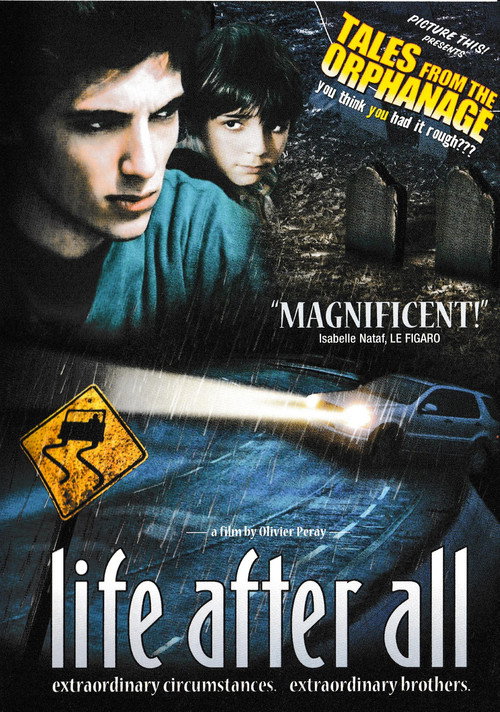
Life After All 2003
"Tales from the orphanage"
Set within the intimate confines of an orphanage, *Life After All (2003)* explores the quiet resilience of children left to navigate grief without the steadying presence of their parents.
Director: Olivier Péray
Cast



Frequently Asked Questions
What is Life After All (2003) about?
*Life After All* follows a group of children at an orphanage who must confront the sudden loss of their parents while navigating their fragmented emotions. Their journey is rooted in the quiet strength of brotherly love, as they learn to lean on each other in a world that has suddenly become uncertain.
Who directed Life After All?
Life After All was directed by Olivier Péray, whose sensitive approach brings emotional depth to the orphanage setting and the young characters at its heart.
Who stars in Life After All?
The film features Marianne Basler, Matthieu Tribes, Maxime Monsimier, Éric Savin, and Clémence Poésy in pivotal roles.
Is Life After All (2003) worth watching?
Though unrated on IMDb, *Life After All* offers a deeply moving family drama that resonates through its authentic portrayal of childhood grief and resilience. Its focus on emotional honesty and sibling bonds makes it a touching watch for fans of poignant, character-driven stories.
How long is Life After All?
Life After All has a runtime of 90 minutes.
About Life After All (2003) — A tender drama of sibling love and orphaned hope
Set within the intimate confines of an orphanage, *Life After All (2003)* explores the quiet resilience of children left to navigate grief without the steadying presence of their parents. Directed with sensitivity by Olivier Péray, this family drama unfolds like a tender yet unflinching glimpse into the bonds that form when life's most devastating moments strike. Sophie Tasma's script delicately balances raw emotion with moments of hope, capturing the essence of brotherly love and solidarity among young survivors.
Beneath its understated surface, the film reveals a poignant story of adaptation and unspoken understanding. The muted tones of the orphanage corridors contrast with the emotional fireworks of the children's interactions, creating an atmosphere that is both heartrending and quietly uplifting. It's a narrative that lingers, reminding viewers of the strength found in community and shared loss.